Ask homeowners who’ve been through a renovation what they’d do differently, and a surprising number will say the same thing: they should have started with the doors and windows. Not with the sofa. Not with the kitchen backsplash. Not with the pendant lights in the dining area. The doors and windows.
The reasoning becomes obvious once you think about it. Every other decision in a home, the wall colours, the flooring choice, the placement of furniture, the way light falls across a room in the afternoon, is downstream of what the openings do. Change the sliding door to the balcony, and suddenly the living room looks different in a way that no paint colour could achieve. Replace a tired hinged aluminium door with something contemporary, and the entrance to the home reads differently before anyone even walks inside.
The Logic of Starting from the Outside In
There’s a practical reason to begin with doors and windows in any renovation. They’re structural. They touch the building envelope. They involve dust, debris, and disruption on a scale that other renovations rarely match. Doing them last, after fresh paint, new flooring, and finished furnishings, means either living through the mess a second time or accepting that the newer finishes will need touching up when the door replacement inevitably damages them.
Doing them first flips this problem into an opportunity. New doors and windows go in when the room is empty, when walls can be patched around the frame, when floors can be finished right up to the sill. Every subsequent renovation decision is then made with the new openings in mind, the actual light they admit, the actual views they frame, the actual proportions of the room they define.
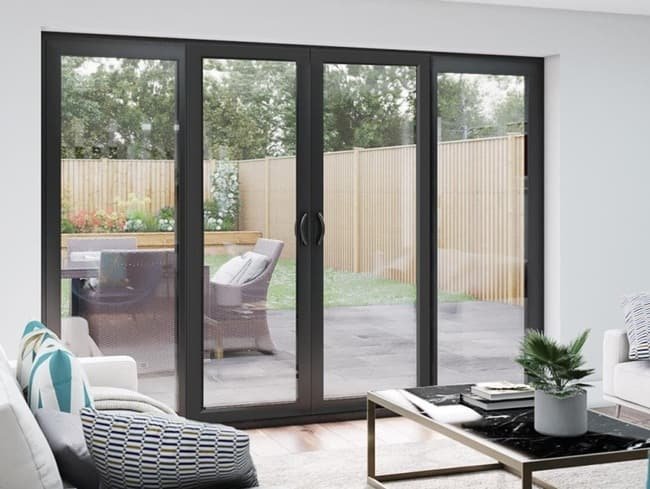
For homeowners considering aluminium sliding doors as part of a renovation, this sequencing matters even more. Sliding door installations often involve widening existing openings to take advantage of what modern systems can accommodate, panel heights well beyond what older sliding doors managed, wider configurations that turn a wall into a threshold. This kind of structural work absolutely needs to happen before the finishing trades arrive.
What Renovating with Aluminium Doors Actually Changes?
The difference between an older door and a well-specified aluminium door design isn’t cosmetic. It shows up in how the home actually behaves day to day.
Older sliding doors, particularly the ones that came standard in Indian apartments a decade or two ago, tend to have a common set of problems. The tracks accumulate grime and become progressively harder to operate. The seals degrade, letting in dust during summer and water during monsoon. The frames warp or corrode, particularly in coastal climates. The hardware loosens, the panels start to rattle, and eventually the door becomes something the homeowner works around rather than uses freely.
Replacing these with modern aluminium sliding doors resolves the problem at the source. Duranium, a special aluminium alloy developed by Hindalco for Eternia’s systems that is 40% stronger than standard aluminium, allows for slim profiles that don’t compromise on structural integrity. High-quality gaskets and effective drainage keep water and dust where they belong. Cycle-tested rollers ensure the door still glides smoothly years into daily use. WiWA certification, Eternia’s independently tested performance rating covering wind resistance, water tightness, and air sealing, provides genuine confidence that the door will perform as promised.
For the homeowner, this translates into everyday experiences that were previously friction points. The door opens with one hand instead of requiring a shove. The living room stays quieter during traffic hours. The floors don’t need mopping after every rain shower. The room simply works better, and continues to work better across the years.
Aluminium Main Door Design and First Impressions
The main door of a home occupies a peculiar position. It’s the element visitors see first, the one homeowners interact with every time they leave or enter, and yet it’s often the last element considered in renovation planning. This is a mistake worth avoiding.
Contemporary aluminium main door design has moved well beyond the utilitarian metal doors of an earlier era. Modern systems offer the visual weight and presence that a main door demands, solid, secure, substantial, while incorporating the material advantages that make aluminium the sensible choice for Indian conditions. No warping in humidity. No repainting every few years. No termite vulnerability. No corrosion in salt air.
Finish options have expanded to match. Deep matte finishes in Graphite Grey or Night Black lend main doors a contemporary architectural quality that reads well against neutral facades. Wood-grain finishes, Teak Wood, Walnut, Oak Wood, bring warmth and traditional character without the maintenance burden that real timber demands. For homeowners renovating with attention to how the home presents from the outside, the main door is the single most impactful element to reconsider.
Eternia’s Duraslim Casement door range offers the kind of engineering that main door installations require: sash heights up to 3,000mm, glass thicknesses supporting single-pane through to laminated configurations, and WiWA-certified performance for wind, water, and air. Multi-point locking provides the security that main doors need. The visual result, a door that reads as considered rather than merely functional, is what elevates a renovation from cosmetic to genuinely transformative.
The Ripple Effect Across the Rest of the Renovation
Beginning a renovation with aluminium doors and sliding glass doors sets up every subsequent decision to succeed. This is worth understanding concretely.
Furniture placement in the living room depends heavily on where the light comes from and how the room opens to outside spaces. New sliding doors that expand the opening to a terrace change the entire logic of how the living area should be arranged. Making furniture decisions before the doors are replaced means either guessing or committing to arrangements that no longer make sense once the openings change.
Paint colours read differently under different light conditions. A wall color chosen for a room with small, tinted-glass sliding doors will look entirely different once those are replaced with slimline clear-glass systems that admit substantially more daylight. Getting the doors right first ensures paint decisions are made in the light the room will actually have.
Flooring transitions between interior rooms and outdoor spaces work best when the sliding door track is factored into the finish work. Flush bottom tracks, a feature of premium aluminium sliding doors like those in Eternia’s Duraslim range, allow flooring to run continuously from inside to terrace or balcony, eliminating the visual break that older doors imposed. This kind of seamless finish is difficult to retrofit if the flooring goes in first.
Even lighting decisions benefit. Ambient lighting, task lighting, and accent lighting all need to complement, rather than compensate for, the natural light entering through the openings. Getting the doors right means the artificial lighting scheme can be layered onto a known baseline rather than designed defensively against inadequate daylight.
What Renovation Planning Looks Like When Doors Come First?
Homeowners who approach renovation by starting with doors and windows tend to end up with more coherent outcomes. The reason is that they’re making all their other decisions with the actual finished openings in mind, rather than working around whatever the old doors happen to be doing.
Aluminium doors and aluminium sliding doors are the right starting point because they set the framework for everything else. They determine how light enters, how rooms open, how the home presents from the outside, and how it feels to move through it from day to day. Get these right, and the rest of the renovation has something worth building around. Get them wrong, or leave them for last, and even the most carefully chosen finishes will struggle against openings that don’t do their job.
For homeowners planning a renovation, this is the most valuable sequencing lesson available. Start with the doors. Everything else follows more easily from there.