Every home has a hidden skeleton behind its furniture and interiors. The wardrobe you open every morning, the kitchen cabinet holding your daily essentials, the study table, the TV unit — all of them rely on some form of wood beneath the outer finish. And in modern homes, two materials dominate that hidden structure: plywood and engineered wood.
One has been trusted for generations because of its strength and durability. The other is a modern alternative designed to reduce cost, improve consistency, and make furniture manufacturing easier. At first glance, they may look identical once laminate or veneer is applied on top. But inside, they behave very differently when exposed to moisture, weight, pressure, and time.
Choosing the wrong material can mean swollen cabinets, sagging shelves, or furniture that weakens far earlier than expected. So before deciding purely based on price or appearance, it’s worth understanding what separates plywood from engineered wood and which one actually deserves a place in your home.
Plywood vs Engineered Wood: Quick Comparison
| Feature | Plywood | Engineered Wood |
| Material Type | Layers of natural wood veneer | Wood fibres, chips, or particles bonded together |
| Strength | Very strong | Moderate to good |
| Moisture Resistance | Excellent in premium grades | Moderate |
| Durability | Long-lasting | Depends on quality |
| Weight Handling | Excellent | Moderate |
| Surface Finish | Slightly uneven naturally | Very smooth |
| Cost | Expensive | More affordable |
| Termite Resistance | Better with treatment | Moderate |
| Lifespan | 15–25 years | 5–15 years |
| Repairability | Easier to repair | Difficult once damaged |
| Best For | Kitchens, wardrobes, heavy-use furniture | Decorative furniture and budget interiors |
| Maintenance | Low | Moderate |
What Is Plywood?
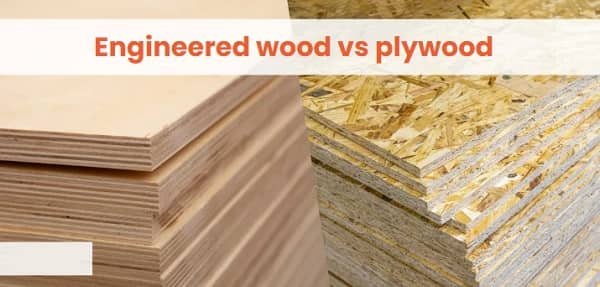
Plywood is an engineered wood product made by bonding multiple thin layers of natural wood veneer together under high pressure.
Each layer is placed with grains running in alternate directions, which gives plywood:
- High strength
- Better stability
- Resistance against bending
- Strong load-bearing capacity
Plywood is widely used in:
- Kitchen cabinets
- Wardrobes
- Beds
- Doors
- Sofa frames
- Heavy-duty furniture
Premium grades like marine plywood are specially designed to resist moisture and humidity.
What Is Engineered Wood?
Engineered wood is a broad category that includes materials made by compressing wood fibres, chips, sawdust, or particles using resin and adhesives.
Common types include:
- MDF (Medium-Density Fibreboard)
- HDF (High-Density Fibreboard)
- Particle board
Engineered wood is designed to provide:
- Smooth surfaces
- Affordable pricing
- Uniform structure
- Easier manufacturing
It is commonly used in:
- Modular furniture
- Decorative panels
- Office furniture
- TV units
- Ready-made wardrobes
Strength and Load Capacity
Plywood is much stronger than most engineered wood products.
Its layered construction allows it to handle:
- Heavy loads
- Continuous pressure
- Long-term structural use
Engineered wood performs adequately for light and medium-duty furniture, but heavy weight can cause bending or sagging over time, especially in lower-quality particle boards.
For beds, kitchen cabinets, and heavy wardrobes, plywood is clearly more reliable.
Winner:
Plywood
Moisture and Water Resistance
This is one of the biggest differences between the two.
Plywood, especially waterproof or marine plywood, performs very well in humid conditions and areas exposed to moisture.
Engineered wood, particularly MDF and particle board, can absorb moisture quickly if not sealed properly. Once swollen, it usually cannot return to its original shape.
For kitchens, bathrooms, and humid Indian climates, plywood is the safer option.
Winner:
Plywood
Surface Finish and Appearance
Engineered wood offers a smoother and more uniform surface compared to plywood.
This makes it ideal for:
- Painted furniture
- Acrylic finishes
- Decorative laminates
- Modern modular interiors
Plywood surfaces can sometimes show minor grain irregularities beneath thin finishes.
For ultra-smooth decorative furniture, engineered wood often looks cleaner.
Winner:
Engineered wood
Durability and Lifespan
Plywood furniture can easily last 15–25 years or more with proper maintenance.
Engineered wood lifespan depends heavily on:
- Material quality
- Moisture exposure
- Usage intensity
Lower-quality engineered wood may weaken much faster under heavy use.
Winner:
Plywood
Cost Difference
Engineered wood is significantly more affordable than plywood.
This is why many ready-made furniture brands use MDF or particle board instead of plywood.
Plywood costs more because of:
- Natural wood layers
- Higher strength
- Better durability
For budget-conscious homeowners, engineered wood can reduce overall interior costs considerably.
Winner:
Engineered wood for affordability
Termite Resistance
Both materials can be affected by termites if untreated.
However, plywood generally performs better because of its denser layered structure and availability of termite-resistant grades.
Particle board and MDF are often more vulnerable if exposed to moisture and insects over time.
Winner:
Plywood
Repair and Maintenance
Plywood is easier to repair and generally remains structurally stable for longer periods.
Engineered wood becomes difficult to repair once swollen, chipped, or cracked. Water damage especially is often permanent.
Winner:
Plywood
Which Is Better for Kitchens?
For kitchens, plywood is usually the better choice because kitchen environments involve:
- Moisture
- Heat
- Oil exposure
- Heavy daily usage
Marine plywood or waterproof plywood is commonly recommended for kitchen cabinets.
Engineered wood may work for decorative sections away from water exposure but is generally less reliable long term.
Which Is Better for Modular Furniture?
Engineered wood works very well for:
- Budget modular furniture
- Decorative wall panels
- Office setups
- Ready-made furniture
Its smooth finish and lower cost make it extremely popular in modern furniture manufacturing.
Which One Should You Choose?
Choose plywood if:
- You want long-lasting furniture
- You need moisture resistance
- You are designing kitchens or wardrobes
- You want better structural strength
- Durability matters more than cost
Choose engineered wood if:
- You want affordable furniture
- You prefer modern smooth finishes
- You need decorative interiors
- The furniture will face lighter usage
- Budget is your top priority
Final Verdict
Both plywood and engineered wood have their place in modern interiors, but they are built for different priorities.
Plywood remains the stronger, more durable, and more reliable option for long-term use. It performs better under pressure, handles moisture more effectively, and lasts significantly longer in demanding conditions.
Engineered wood, meanwhile, offers affordability, smooth finishes, and manufacturing consistency. It is excellent for decorative furniture and modern budget interiors where extreme durability is not essential.
In simple terms:
- Choose plywood for strength and long-term reliability
- Choose engineered wood for affordability and decorative modern furniture
For most Indian homes, many interior designers actually combine both — plywood for structural areas and engineered wood for decorative sections — to balance durability and cost.
FAQs
Q: Which is better, plywood or engineered wood?
A: Plywood is generally better for strength, durability, and moisture resistance, while engineered wood is more affordable and smoother in finish.
Q: Does engineered wood last long?
A: Good-quality engineered wood can last several years indoors, but it usually has a shorter lifespan compared to plywood.
Q: Which is more expensive?
A: Plywood is more expensive because it uses natural wood layers and offers better durability.
Q: Is engineered wood waterproof?
A: Most engineered wood products are not fully waterproof and can swell when exposed to moisture.
Q: Which is better for wardrobes?
A: Plywood is better for long-lasting wardrobes, especially in humid climates.
Q: Can engineered wood look premium?
A: Yes. Engineered wood provides very smooth finishes and works well with laminates, acrylics, and paints.
Q: Which material is best for kitchens?
A: Marine plywood or waterproof plywood is generally the best option for kitchen cabinets because of its moisture resistance and durability.