Indian car buyers have moved decisively toward SUVs. From compact crossovers to full-size family SUVs, the higher-riding body style now dominates showrooms and wish lists. Yet for a family spending ₹10 lakh to ₹25 lakh, choosing an SUV simply because it is popular can be a mistake. Indian roads are unusually mixed: smooth expressways can turn into broken city stretches, unmarked speed breakers appear without warning, monsoon rain can flood low-lying streets, and tight metro parking often rewards a smaller footprint. Sedans, meanwhile, still offer advantages in stability, efficiency, ride comfort, and long-distance composure. So the better choice depends less on trend and more on where and how you drive. Let’s compare both body styles point by point to see which one suits Indian roads better.
1. Ground Clearance: Potholes, Speed Breakers, and Monsoon Floods
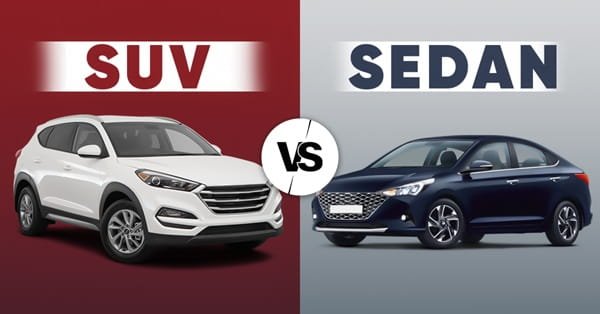
Ground clearance is one of the strongest reasons Indian buyers prefer SUVs. Most mainstream SUVs and crossovers offer roughly 190 mm to 225 mm of clearance, while common sedans usually sit closer to about 165 mm to 175 mm. That difference sounds small on paper, but it becomes important on real roads.
An SUV gives the driver more confidence over tall speed breakers, deep potholes, uneven village roads, broken state highways, and badly designed parking ramps. With five passengers and luggage on board, the extra clearance also reduces the chance of scraping the underbody.
Sedans demand more care. Their lower belly and longer wheelbase can make high-centred speed humps stressful, especially when the car is fully loaded. Drivers often need to approach steep breakers slowly or at an angle.
Monsoon waterlogging also favours an SUV because the body sits higher. However, higher ground clearance does not mean the vehicle is safe in deep floodwater. Water-wading ability depends on intake height, electrical protection, and manufacturer specifications, not ground clearance alone.
Verdict: SUVs clearly perform better on rural roads, semi-urban stretches, construction-heavy cities, steep ramps, and areas with poor road maintenance.
2. Highway Stability & Driving Comfort
Move onto a smooth highway and the sedan begins to fight back. Its lower centre of gravity gives it a natural advantage in stability. At 100–120 km/h on wide expressways, a well-engineered sedan generally feels more planted during lane changes, sweeping bends, and sudden steering corrections.
This is especially noticeable on long, fast roads such as the Yamuna Expressway or the Samruddhi Mahamarg. A sedan usually shows less body roll and feels calmer at speed. Good sedans also tend to offer a relaxed rear-seat experience, with suspension tuned more for comfort than for rough-road toughness.
Modern SUVs are far better than older body-on-frame models and many monocoque SUVs are genuinely stable at highway speeds. Still, a taller body naturally has more weight higher up, so quick direction changes can produce more body movement. Some SUVs also use firmer suspension to control that movement, which can make joints and sharp bumps feel more noticeable on long journeys.
For enthusiastic drivers, a sedan often feels more precise. Steering inputs are cleaner, braking feels more settled, and cornering requires fewer corrections. The SUV counters with a higher seating position and a better view over surrounding traffic.
Verdict: Sedans remain the stronger choice for frequent expressway use, high-speed stability, and driver engagement.
3. Cabin Space, Boot Capacity, and Family Ergonomics
An SUV is not always larger inside than a sedan, but its shape makes the available space easier to use. The upright seating position is particularly useful for elderly parents, passengers with knee discomfort, and families with small children. You step into many SUVs rather than lowering yourself into the seat.
Sedans require more bending while entering and getting out, especially from the rear. Once seated, though, a good sedan can feel more relaxing. The lower seat base, generous legroom, and reclined rear-seat posture often suit long highway trips very well.
Boot design is another practical difference. A sedan has a separate enclosed luggage compartment. That keeps luggage, road noise, and odours away from the cabin. Large sedan boots can easily take multiple suitcases.
SUVs are more flexible. Folding rear seats and a tall, wide tailgate make it easier to carry bicycles, cartons, pet crates, plants, or bulky weekend luggage. The vertical loading space is particularly useful for families who regularly travel with mixed-size items.
Verdict: SUVs win for easier entry and flexible loading. Sedans remain excellent for passengers who value rear-seat comfort and a quiet, separate boot.
4. Financial Reality: Fuel Economy, Maintenance, and Resale Value
The SUV body style usually costs more to run. It is generally heavier and less aerodynamic, so fuel efficiency is often lower than a comparable sedan. In everyday petrol driving, many SUVs may return around 12–16 kmpl, while similar sedans can deliver roughly 15–20 kmpl. These are broad real-world ranges, not guarantees. Engine type, gearbox, traffic, load, and driving style can change the result.
Tyres are another cost that buyers often overlook. Many SUVs now use 17-inch to 19-inch wheels with wider tyres. Replacing a full set can be significantly more expensive than replacing the 15-inch to 17-inch tyres commonly fitted to sedans. Insurance may also be higher when the SUV has a higher purchase price and more expensive parts.
| Metric / Aspect | SUV | Sedan |
| Average Ground Clearance | 190 mm–225 mm | 165 mm–175 mm |
| City Fuel Efficiency | Lower due to weight and drag | Usually higher |
| Tyre Replacement Cost | Higher, often 17″–19″ wheels | Lower, often 15″–17″ wheels |
| Ingress / Egress | Easy, upright step-in | More bending required |
| Resale Value in India | Excellent for popular models | Moderate to good, model-dependent |
Sedans usually have an advantage in fuel bills, tyre costs, and day-to-day running expenses. SUVs, however, currently benefit from stronger buyer demand in the used-car market. Popular SUV models can therefore hold their value very well.
That does not mean every SUV will automatically have superior resale. Brand reputation, service history, accident record, demand for that specific model, and mechanical condition matter just as much as body style.
For high-mileage users, even a 2–3 kmpl efficiency gap can add up over several years. For low-mileage owners who change cars every four or five years, depreciation and resale value may matter more than fuel savings.
Verdict: Sedans are usually cheaper to run, while popular SUVs often compensate with stronger resale demand.
The Final Verdict: Which One Should You Buy?
There is no universal winner because Indian driving conditions vary too much. An SUV is the safer all-round choice for buyers who routinely face broken roads, steep speed breakers, poor monsoon drainage, rural travel, or frequent family use. A sedan makes more sense when most driving happens on good city roads and highways.
- Buy an SUV if: You regularly face bad roads, tall speed breakers, monsoon waterlogging, rough rural routes, elderly-family access needs, or you want a higher driving position and strong resale demand.
- Buy a Sedan if: Your daily commute is mainly on decent city roads and highways, and you value fuel efficiency, lower tyre costs, high-speed handling, and a plush rear-seat experience.
For the average Indian family dealing with mixed road quality, an SUV has the broader practical advantage. But for drivers who spend most of their time on smooth highways and well-paved urban roads, a sedan can still be the more refined, efficient, and enjoyable choice.