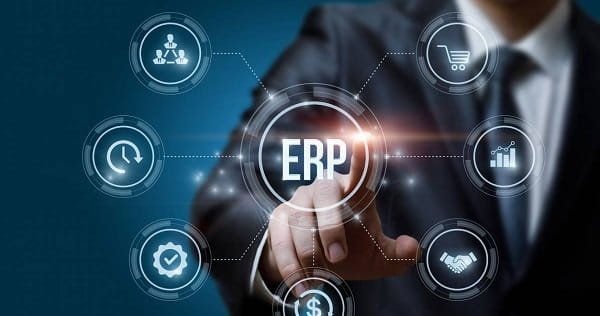
Enterprise Resource Planning (ERP) software is a system that helps businesses manage different operations from one central platform. Instead of using separate software for accounting, inventory, sales, HR, and production, ERP combines everything into a single integrated system.
Popular ERP platforms include SAP ERP, Oracle ERP, Microsoft Dynamics 365, and Odoo.
ERP systems are widely used in industries like manufacturing, retail, healthcare, logistics, education, and finance. But while ERP software offers many benefits, it also comes with challenges and costs.
Advantages of ERP Software
1. Centralized Data Management
One of the biggest advantages of ERP software is that all business data is stored in one place.
Departments like:
- Finance
- Sales
- HR
- Inventory
- Customer service
can access the same updated information in real time.
This reduces confusion and improves coordination between teams.
2. Improved Productivity
ERP automates many repetitive tasks such as:
- Invoice generation
- Payroll processing
- Inventory tracking
- Order management
Employees spend less time on manual work, which increases overall productivity.
3. Better Decision-Making
ERP systems provide detailed reports and analytics. Managers can quickly see:
- Sales performance
- Profit margins
- Inventory levels
- Employee productivity
This helps companies make faster and smarter business decisions.
4. Enhanced Customer Service
Because all customer information is stored in one system, businesses can respond more quickly to customer needs.
ERP helps in:
- Faster order processing
- Better delivery tracking
- Improved communication
- Accurate billing
This improves customer satisfaction.
5. Real-Time Information Access
ERP software updates data instantly across departments.
For example:
- When inventory changes, the sales department can see it immediately.
- Finance teams can track transactions in real time.
This improves operational efficiency.
6. Better Inventory Management
ERP systems help businesses avoid:
- Overstocking
- Understocking
- Inventory loss
The software tracks stock levels automatically and can even predict future inventory needs.
7. Increased Data Security
Modern ERP systems include:
- User access controls
- Data backups
- Encryption
- Audit tracking
Sensitive company information becomes more secure compared to traditional manual systems.
8. Scalability
As businesses grow, ERP systems can often expand with them.
New modules can be added for:
- E-commerce
- CRM
- Manufacturing
- Supply chain management
This makes ERP suitable for long-term business growth.
Disadvantages of ERP Software
1. High Initial Cost
ERP implementation can be expensive.
Costs may include:
- Software licensing
- Hardware upgrades
- Employee training
- Maintenance
- Customization
Large ERP systems can cost lakhs or even crores for big companies.
2. Complex Implementation
Installing ERP software is not simple.
Implementation may take:
- Several months
- Sometimes even years
Businesses often need technical experts to configure and manage the system properly.
3. Employee Training Challenges
ERP systems can be difficult for employees to learn initially.
Workers may face:
- Confusion
- Resistance to change
- Productivity slowdown during transition
Training becomes necessary for smooth operation.
4. Customization Problems
Every business has different needs. Sometimes ERP software may not fully match a company’s workflow.
Customizing the software can:
- Increase costs
- Delay implementation
- Create technical issues later
5. Dependence on One System
Since all operations depend on one ERP platform, system failure can affect the entire business.
If the ERP server crashes:
- Sales
- Billing
- Inventory
- Payroll
may all stop temporarily.
6. Maintenance and Upgrade Costs
ERP software requires:
- Regular updates
- Technical support
- Security patches
- Server maintenance
These ongoing costs can become expensive over time.
7. Data Migration Risks
Moving old company data into a new ERP system can be risky.
Possible issues include:
- Data loss
- Incorrect records
- Duplicate entries
Poor migration can create serious operational problems.
8. Not Always Suitable for Small Businesses
Some small businesses may not need a full ERP system.
For very small companies:
- ERP can become too expensive
- Features may remain unused
- Simpler software may work better
Advantages and Disadvantages Table
| Advantages of ERP Software | Disadvantages of ERP Software |
| Centralized data management | High implementation cost |
| Improves productivity | Complex setup process |
| Better business decisions | Employee training required |
| Real-time information access | Customization challenges |
| Better inventory control | Dependence on one system |
| Improved customer service | Maintenance expenses |
| Stronger data security | Data migration risks |
| Scalable for business growth | May not suit small businesses |
Final Verdict
ERP software can completely transform how a business operates. It improves efficiency, communication, automation, and decision-making by bringing all departments together into one unified system.
However, ERP implementation is not easy or cheap. Companies must carefully evaluate their budget, business size, technical readiness, and long-term goals before investing in an ERP system.
For large and growing businesses, ERP software often becomes a valuable long-term investment. But for smaller organizations with limited operations, simpler business management tools may sometimes be a more practical choice.