The kitchen countertop absorbs more daily wear than almost any other surface in a home. It meets hot pans, standing water, acidic spills, and the edge of a knife, often within the same hour. The choice of material therefore sits at the center of any kitchen project, shaping both how the room looks and how it holds up over a decade of use.
Kitchen tops now come in a wider range of materials than they did a generation ago, and each one behaves differently. Comparing them well means looking past the showroom finish and asking how a surface performs under the specific demands of a working kitchen.
Key Factors That Define A Good Kitchen Surface
Before comparing different kitchen surface materials, it is important to establish the criteria that matter most. While aesthetics play a role, long-term performance, maintenance, and practicality are equally important when selecting a surface that suits your lifestyle.
- Heat and stain resistance: The surface should withstand hot cookware, everyday spills, and exposure to acidic ingredients without losing its appearance.
- Maintenance requirements: Consider the level of upkeep the material needs. Some surfaces require regular sealing, while others are designed for minimal maintenance.
- Slab size and installation: Large-format surfaces create a seamless look with fewer joints, whereas smaller slabs may require visible seams depending on the layout.
- Overall aesthetics: The surface should complement the cabinetry, flooring, lighting, and overall kitchen design to create a cohesive space.
The right choice depends on how the kitchen is used. A household that cooks extensively every day will have different priorities from one where the kitchen is primarily used for light cooking or entertaining. Evaluating these factors first makes it easier to narrow down the most suitable material.
Comparing The Common Countertop Materials
Four materials account for most kitchen installations today, and each offers a distinct balance of durability, upkeep, and character. The sections below outline how they differ in practice.
Granite
Granite is a natural igneous rock, quarried in blocks and cut into slabs. Each piece carries its own grain and color movement, so no two installations look identical. That variation appeals to owners who want a surface with visible geological character.
It handles heat well and resists scratching. Granite is porous, however, so it needs sealing on installation and periodic resealing afterward to keep oil and wine from staining. Darker granites tend to require less upkeep than lighter, more absorbent ones. It remains a durable choice for a busy kitchen, provided the owner keeps up with the sealing routine.
Engineered Quartz
Engineered quartz is made by binding crushed quartz with resin and pigments, then forming it into slabs under pressure. The result is non-porous, so it resists staining without sealing and offers consistent color across a batch. This suits buyers who want a refined kitchen slab stone appearance with uniformity rather than natural variation.
The main limitation is heat. The resin can scorch or discolor under a hot pan, so trivets are a sensible habit. For everyday resistance to stains and scratches, quartz remains a practical middle ground, and its color range spans convincing stone imitations through solid contemporary tones.
Marble
Marble is the classic kitchen surface, valued for its soft veining and the way light settles on a honed finish. Bakers in particular appreciate its natural coolness for working pastry.
It is also the highest-maintenance option in common use. Marble is relatively soft and reactive, and acids from lemon, vinegar, or wine etch the surface and leave dull marks. It scratches more readily than granite or quartz. Many owners accept this patina as part of the material’s character, though anyone who wants a marble kitchen to stay pristine should consider the care involved.
Sintered And Engineered Surfaces
A newer category has grown around large-format engineered surfaces, produced by compacting mineral particles under high pressure and heat in a process that echoes how natural stone forms over geological time. These slabs are fired into a dense, non-porous body.
The performance profile draws architects to them for kitchens. Sintered surfaces resist heat, scratching, staining, and UV fading, and their non-porous structure keeps them easy to clean and hygienic around food. They are produced in large formats, which lets a designer run a countertop, an island edge, and a backsplash in continuous material with minimal joints. Among engineered surfaces in this space, brands such as Neotra Surfaces show how large-format production supports that kind of seamless kitchen layout. They also make a practical choice for kitchens, with varied looks and resistance to heat, stains, scratches, and UV fading for everyday use.
Matching The Material To Your Requirements
The ideal kitchen surface depends on how the space is used and the level of maintenance you are comfortable with. Choosing a material based on your lifestyle ensures it performs well over the long term.
- For frequent cooking: Sintered surfaces are ideal for households that need excellent heat resistance, durability, and minimal maintenance.
- For a natural look: Granite offers distinctive patterns and lasting strength but benefits from periodic sealing.
- For easy maintenance: Quartz provides consistent colors, good stain resistance, and requires very little upkeep.
- For timeless elegance: Marble delivers unmatched natural beauty, provided you are prepared for regular care and the development of a natural patina over time.
Budget should also be part of the decision. Along with the cost of the material, consider fabrication and installation, especially for large-format slabs, as these can significantly influence the overall project cost.
The Role Of Finish And Format
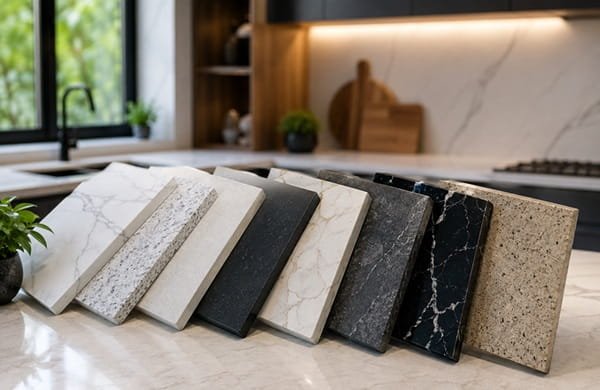
Two details are easy to overlook and worth settling early, as both influence how a surface looks and behaves over time. Finish affects appearance and daily upkeep at once. Polished surfaces reflect light and show fingerprints and water spots more readily, while honed and matte finishes hide daily marks but read as less formal. Slab format matters as well, since a larger format means fewer seams, which gives a cleaner surface and offers water fewer places to collect. Bringing samples into the actual kitchen, under its own light and against the real cabinet color, reveals far more than any showroom can.
Conclusion
Choosing a kitchen surface is a set of trade-offs between appearance, performance, maintenance, and budget, weighed against how a particular household cooks and lives. Granite offers natural character with a sealing routine, quartz offers low-maintenance consistency with a caution around heat, marble offers a classic look that ages visibly, and sintered surfaces offer broad resistance in large formats at a higher cost. Starting from the way the room is used and testing samples in its own light tends to make the right material for a given kitchen clear.