At around ₹20 lakh, Indian car buyers are no longer choosing simply between a hatchback and a compact SUV. This is the point where the market gets genuinely competitive. A buyer may be comparing the refinement of a Hyundai Creta, the technology of a Kia Seltos, the road presence of a Mahindra Scorpio-N, the fuel savings of a Toyota Hyryder hybrid, and the fresh appeal of the Tata Sierra—all within broadly the same shopping budget.
That makes the decision harder, not easier. One car may offer a better rear seat, another stronger highway performance, while a third could save thousands of rupees a year in fuel. Features such as ADAS, panoramic sunroofs and large screens are attractive, but they should not outweigh crash-test performance, suspension quality, usable boot space or the cost of running the car for five to seven years.
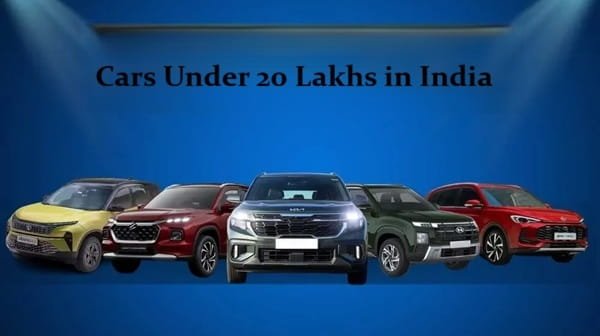
There is also the price gap between the brochure and the final invoice. A model advertised below ₹20 lakh ex-showroom can easily cross that figure after RTO charges, insurance and accessories. For this list, we have therefore focused on specific variants that can realistically stay near the ₹20 lakh on-road mark in many Indian cities while still delivering a meaningful upgrade in comfort, safety or performance.
Here are the five cars that make the strongest case for your money in 2026—and the type of buyer each one suits best.
How We Evaluated These Cars for Indian Buyers
The ranking is based on four practical factors rather than brochure appeal alone.
- Safety and build quality: Official Bharat NCAP or Global NCAP performance was given priority, along with airbags, ESC, ISOFIX, all-wheel disc brakes and available ADAS.
- Real-world running costs: Claimed mileage was separated from realistic city and highway consumption. Hybrid efficiency and the fuel appetite of large turbo-petrol SUVs were considered carefully.
- Family comfort and practicality: Rear-seat width, knee-room, boot space, suspension quality, third-row usability and ease of driving in crowded Indian cities were considered.
- Variant value: Recommended trims were chosen with a ₹20 lakh on-road ceiling in mind. Exact prices still vary significantly by state, insurance choice and dealer offers.
1. Hyundai Creta S(O) Petrol MT – The Best All-Round Family SUV
The Hyundai Creta remains one of the easiest midsize SUVs to recommend because it does almost everything well. It is comfortable in the city, stable enough for long highway trips, easy to drive, widely supported by Hyundai’s service network and available with one of the broadest powertrain selections in the segment.
Price and recommended variant: The Creta starts at about ₹10.91 lakh ex-showroom. The S(O) petrol manual is the sweet spot for a ₹20 lakh on-road budget because it adds the equipment most families actually want without pushing into expensive top trims. Depending on the state and insurance, an SX petrol manual may also fit close to the ceiling.
Engine and transmission options: Hyundai offers a 1.5-litre naturally aspirated petrol, a 1.5-litre diesel and a 1.5-litre turbo-petrol. Gearbox choices include manual, IVT/CVT, torque-converter automatic and 7-speed DCT depending on the engine. The regular petrol is the smoothest city choice, while the diesel makes more sense for high annual mileage.
Safety and technology: Six airbags, ESC, hill-start assist, TPMS and rear parking sensors are standard. Higher trims add Hyundai SmartSense Level 2 ADAS, including lane-keeping support, forward collision avoidance and adaptive cruise functions. However, the current 2026 Creta does not have a current Bharat NCAP result, so it should not be marketed with an unsupported 5-star claim.
Mileage and comfort: The 1.5 petrol manual is rated at 17.4kmpl and the IVT at 17.7kmpl, while the diesel manual claims 21.8kmpl. In real-world testing, the petrol IVT has returned roughly 11.2kmpl in the city and 15kmpl on the highway. Ride comfort is a major strength, and the rear seat is well suited to two adults plus a child on long journeys.
Pros:
- Comfortable ride and refined cabin for everyday family use.
- Wide choice of petrol, diesel and automatic powertrains.
- Strong dealer network and easy urban drivability.
Cons:
- No current Bharat NCAP rating for the 2026 Creta.
- Turbo-petrol and upper automatic variants can quickly exceed the ₹20 lakh on-road budget.
2. Kia Seltos HTK(O) Petrol MT – The Technology and Performance Pick
The 2026 Kia Seltos is no longer just a stylish alternative to the Creta. Its latest generation combines a larger, more premium cabin with stronger crash-test credentials and some of the most advanced technology in the segment.
Price and recommended variant: The Seltos starts at ₹10.99 lakh ex-showroom. The HTK(O) petrol manual, at about ₹14.52 lakh ex-showroom, is the safer value choice for a strict ₹20 lakh on-road budget. Buyers in lower-tax locations can also examine higher trims, but the HTX and turbo variants need a careful on-road quotation.
Engine and transmission options: There are three 1.5-litre engines: a 115hp naturally aspirated petrol, a 160hp turbo-petrol producing 253Nm, and a 116hp diesel. Depending on the engine, Kia offers manual, IVT, iMT, torque-converter automatic and 7-speed DCT gearboxes.
Safety and ADAS: This is a major strength of the new Seltos. It achieved 5 stars in Bharat NCAP, scoring 31.70/32 for adult occupant protection and 45/49 for child occupant protection. Six airbags and ESC are standard, while higher trims offer a Level 2+ ADAS suite with 21 driver-assistance functions.
Mileage and driving feel: The naturally aspirated petrol is rated at around 16.5kmpl, the diesel manual at 19.4kmpl and the turbo DCT at around 17.5kmpl. In independent testing, the 160hp turbo DCT returned about 9.3kmpl in the city and 14.8kmpl on the highway. The turbo engine is genuinely quick, while the naturally aspirated petrol-IVT combination is smoother for heavy urban traffic.
Pros:
- 5-star Bharat NCAP safety rating.
- Excellent infotainment, connected technology and available Level 2+ ADAS.
- Powerful 160hp turbo-petrol option for enthusiastic drivers.
Cons:
- Turbo-DCT fuel economy drops sharply in congested city traffic.
- Feature-rich higher variants can exceed ₹20 lakh on-road.
3. Mahindra Scorpio-N Z4 Petrol MT – The Rugged 7-Seater Champion
The Scorpio-N serves a completely different buyer from the Creta and Seltos. It uses a proper ladder-frame chassis, offers rear-wheel drive, can seat six or seven depending on variant and is available with four-wheel drive on selected diesel versions. For rough roads, family highway touring and genuine SUV presence, it remains difficult to match at this price.
Price and recommended variant: The 2026 facelift ranges from ₹13.69 lakh to ₹25.49 lakh ex-showroom. The Z4 petrol manual, priced around ₹15.57 lakh ex-showroom, is the practical choice for buyers trying to remain below ₹20 lakh on-road. The Z4 diesel may also fit in some states, while automatic and higher trims can cross the limit.
Engine and drivetrain: The 2.0-litre turbo-petrol produces 203hp and 370Nm with the manual, rising to 380Nm with the automatic. The 2.2-litre diesel makes either 132hp or 175hp depending on variant, with the stronger version producing up to 400Nm. Selected diesel trims offer Mahindra’s 4XPLOR four-wheel-drive system.
Safety: The Scorpio-N earned 5 stars for adult occupant protection and 3 stars for child occupant protection in Global NCAP testing under the 2022 protocol. The updated 2026 range adds six airbags, ESC, TPMS, hill hold, hill descent control and all-wheel disc brakes, while the top Z8L also offers Level 2 ADAS.
Mileage and comfort: This is not the SUV to buy for fuel economy. Independent testing has recorded about 7.9kmpl city and 9.4kmpl highway for the petrol automatic, while the diesel automatic managed roughly 8.6kmpl city and 11.7kmpl highway. The second row is spacious and comfortable, but the third row is best for children or shorter trips, and luggage space is limited when all three rows are in use.
Pros:
- True body-on-frame SUV construction and commanding road presence.
- Strong petrol and diesel engines with genuine 4WD available higher up.
- Useful three-row cabin for larger families.
Cons:
- High fuel consumption, particularly with the turbo-petrol.
- Third-row comfort and boot space with all seats up are limited.
4. Toyota Urban Cruiser Hyryder S Hybrid – The Fuel-Efficiency Champion
For buyers who spend much of their time in urban traffic but do not want to depend on charging infrastructure, the Hyryder strong hybrid is one of the most interesting cars in the segment. It can run on electric power for short periods at low speeds and uses the petrol engine and motor together when more performance is required.
Price and recommended variant: The Hyryder range currently starts at about ₹11.31 lakh ex-showroom and extends to roughly ₹19.99 lakh. The S Hybrid is the entry strong-hybrid trim and is the version to target for this budget. Because strong-hybrid road tax treatment differs between states, its final on-road price can sit just below or slightly above ₹20 lakh, so local pricing is especially important.
Powertrain: The strong hybrid combines a 1.5-litre petrol engine with an electric motor and e-CVT, producing about 116hp system output. Toyota also offers a 103hp NeoDrive petrol, CNG versions and an AWD option with the regular petrol powertrain.
Safety: Six airbags, vehicle stability control, hill-hold control and ISOFIX are available across the current range. The Hyryder has not yet received an official Bharat NCAP or Global NCAP rating, and it does not offer an ADAS suite, so buyers should not confuse its good safety equipment list with a verified crash-test star score.
Mileage and comfort: The strong hybrid officially claims 27.97kmpl. More importantly, independent mixed driving tests have returned about 21.57kmpl, which is outstanding for a midsize petrol SUV. The hybrid is especially efficient in stop-go city use. Rear-seat comfort is good, although the hybrid battery packaging reduces luggage flexibility compared with some conventional petrol rivals.
Pros:
- Outstanding 27.97kmpl claimed hybrid efficiency and excellent real-world economy.
- Smooth, quiet urban driving with strong-hybrid assistance.
- Toyota ownership reputation and practical midsize SUV dimensions.
Cons:
- No official NCAP crash-test rating yet.
- S Hybrid can cross ₹20 lakh on-road in higher-tax states.
5. Tata Sierra Pure / Pure+ Petrol – The New-Age Safety and Space Pick
The return of the Sierra is more than a nostalgia exercise. Tata has positioned the new model as a roomy five-seat SUV between the Curvv and Harrier, with distinctive styling, a long wheelbase, a genuinely large boot and a modern powertrain range.
Price and recommended variant: The Sierra starts at about ₹11.49 lakh ex-showroom and extends beyond ₹21 lakh. For a strict ₹20 lakh on-road ceiling, the Pure petrol manual is the safest recommendation. The Pure+ or selected automatic versions can also fit depending on state taxes and insurance.
Engine and transmission options: Tata offers a 1.5-litre naturally aspirated petrol producing 106hp, a 160hp turbo-petrol with 255Nm and a 1.5-litre diesel producing 118hp with up to 280Nm. Manual, DCT and torque-converter automatic transmissions are offered depending on the engine and variant.
Safety: The Sierra has a 5-star Bharat NCAP rating, scoring 31.14/32 for adult occupant protection and 44.73/49 for child occupant protection. The range includes six airbags and ESC, while higher versions add 360-degree cameras, blind-spot monitoring and Level 2 ADAS.
Mileage, space and road behaviour: Claimed fuel economy ranges from around 15.3-17.4kmpl for petrol versions and 19.2-21.3kmpl for diesels. Independent testing of the turbo-petrol automatic returned about 10.1kmpl overall, while the diesel automatic averaged roughly 13.05kmpl. The Sierra’s 2,730mm wheelbase helps rear-seat space, and boot capacity is quoted at about 622 litres to the roof. Its 205mm ground clearance and well-controlled suspension make it well suited to broken highways and monsoon-damaged roads.
Pros:
- 5-star Bharat NCAP safety rating.
- Spacious cabin, long wheelbase and very large luggage area.
- Distinctive design with petrol, turbo-petrol and diesel choices.
Cons:
- Naturally aspirated petrol prioritises affordability over strong performance.
- Turbo-petrol automatic is thirsty in heavy city driving.
Top 5 Cars Under 20 Lakhs in India 2026: Quick Comparison
| Car Model | Segment | Recommended Variant | Safety | Efficiency / Real-World | Best For |
| Hyundai Creta | Midsize SUV | S(O) Petrol MT | No current BNCAP rating | 17.4kmpl claimed; petrol IVT ~11.2 city / 15 highway | All-round family use |
| Kia Seltos | Midsize SUV | HTK(O) Petrol MT | 5-star Bharat NCAP | 16.5kmpl NA petrol; turbo DCT ~9.3 city / 14.8 highway | Tech & performance |
| Mahindra Scorpio-N | 3-row ladder-frame SUV | Z4 Petrol MT | 5-star adult / 3-star child GNCAP | Petrol AT ~7.9 city / 9.4 highway | Rugged 7-seat use |
| Toyota Hyryder | Hybrid midsize SUV | S Hybrid AT | Not NCAP rated | 27.97kmpl claimed / ~21.57kmpl tested | Hybrid mileage |
| Tata Sierra | Midsize SUV | Pure / Pure+ Petrol | 5-star Bharat NCAP | 17.4kmpl petrol MT claimed; turbo AT ~10.1 overall | Safety, space & design |
Buyer’s Decision Matrix: Which Car Should You Buy?
- Choose the Hyundai Creta if: you want the most balanced family package with a refined ride, multiple powertrains and easy long-term ownership.
- Choose the Kia Seltos if: technology, a verified 5-star Bharat NCAP rating and the option of strong turbo-petrol performance matter most.
- Choose the Mahindra Scorpio-N if: you need a rugged three-row SUV, often drive on poor roads or highways, and are prepared for higher fuel bills.
- Choose the Toyota Urban Cruiser Hyryder if: fuel economy is the priority and most of your driving happens in city traffic where the strong-hybrid system works best.
- Choose the Tata Sierra if: you want a fresh design, excellent safety credentials, a roomy five-seat cabin and large luggage capacity.
Final Thoughts & On-Road Buying Tip
At ₹20 lakh, the smartest purchase is not automatically the model with the longest feature list. The Creta is the most rounded everyday family SUV, the Seltos offers the strongest mix of technology and verified safety, the Scorpio-N is the proper rugged seven-seater, the Hyryder strong hybrid is the efficiency specialist, and the Sierra brings together modern safety, space and distinctive design.
Before booking, insist on a written on-road quotation that separates ex-showroom price, road tax, registration, insurance, extended warranty, accessories and dealer charges. Compare insurance independently and check whether the next-lower variant retains the same airbags, ESC and crash structure. A ₹1 lakh saving on cosmetic equipment is often more sensible than stretching the budget merely for larger wheels, a panoramic sunroof or extra screens.