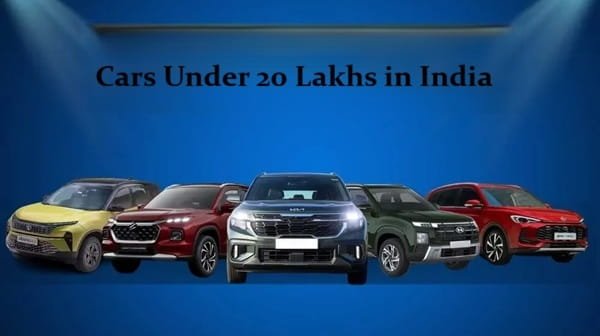
The ₹20 lakh mark has changed the meaning of a family 7-seater in India. A three-row car is no longer automatically a plain people mover or a taxi-oriented MPV. Buyers can now choose from body-on-frame SUVs, refined monocoque crossovers and feature-rich MPVs with six airbags, connected technology, strong turbo engines and much better highway manners than the older generation of utility vehicles.
The harder question is whether the third row actually works for your family. Seven seats on a brochure do not guarantee comfortable seven-person travel. Second-row seat travel, access to the last row, roof height, dedicated AC vents and the amount of luggage space left with every seat upright matter far more during a real family trip. Some models can take adults in the third row for a few hours; others are better treated as 5+2 cars for children or occasional short journeys.

Price needs the same reality check. An ex-showroom price of ₹16-17 lakh can easily become a bill close to ₹20 lakh after state road tax, registration, insurance and other mandatory charges. The gap varies by state, which is why a top-end variant that appears to fit the budget on a website may cross it once the dealer prepares the final quotation.
This guide therefore evaluates specific 2026 variants that can remain around the ₹20 lakh on-road mark in major Indian markets. The focus is genuine three-row usefulness, safety, real-world efficiency, engine suitability and the equipment families will use every day – not simply the longest feature list.
How We Evaluated These Cars for Indian Buyers
Third-Row Usability & Practicality: We looked at access to the last row, adult versus child comfort, second-row sliding or reclining ability, rear AC vent placement and luggage space with all three rows in use. A 7-seater that forces you to choose between passengers and all their bags loses marks for family practicality.
Safety & Build Quality: Official Bharat NCAP and Global NCAP results were given priority. We also checked six-airbag availability, ESC, ISOFIX, seat-belt reminders and active safety features. Older crash-test results are identified clearly instead of being presented as if they apply to a newer facelift automatically.
Real-World Efficiency & Engine Versatility: ARAI figures are useful for comparison, but they do not reproduce crowded city traffic, seven occupants, luggage and constant air-conditioning. Petrol, turbo-petrol, diesel and CNG options were therefore judged on both laboratory numbers and available road-test results.
On-Road Variant Value: The recommended trims retain the essential family equipment while staying near ₹20 lakh on-road in markets such as Odisha and several other states. Exact RTO and insurance costs can still move the final bill up or down by tens of thousands of rupees.
1. Mahindra Scorpio-N Z4 Diesel MT – The Rugged Family SUV
Price and recommended variant
The 2026 Scorpio-N starts at about ₹13.69 lakh ex-showroom. For this budget, the Z4 diesel manual is the most balanced pick: it is around ₹16.12 lakh ex-showroom and roughly ₹18.8-19 lakh on-road in Bhubaneswar depending on the insurer and dealer quote. Buyers who prefer petrol can also consider the Z4 petrol manual, while the petrol automatic sits right around the ₹20 lakh line in some markets.
Powertrain & Performance choices
Mahindra offers a 2.0-litre turbo-petrol and a 2.2-litre diesel. The petrol produces up to 203hp, while the higher-output diesel develops 175hp and as much as 400Nm with the automatic. The diesel suits the Scorpio-N particularly well because its low- and mid-range torque makes a fully loaded SUV easier to drive on highways, inclines and broken rural roads. Four-wheel drive is available higher in the range, although those versions usually exceed this budget.
Seating, Third-Row Comfort & Boot Space
The Scorpio-N has a broad, comfortable second row and an upright seating position that works well for long journeys. The third row is front-facing but is tight on knee room and is better for children, teenagers or short adults on shorter drives. It also lacks some of the dedicated third-row conveniences found in MPVs. Luggage space with all seven seats upright is limited, so a full seven-person holiday will usually require soft bags or a roof carrier.
Safety Credentials
The Scorpio-N scored 5 stars for adult occupant protection and 3 stars for child occupant protection in Global NCAP testing under the 2022 protocol. Mahindra offers up to six airbags, ESC, hill-hold, hill-descent control, ISOFIX and four-wheel disc brakes depending on variant. The older Global NCAP result should be read with its date and test specification in mind rather than treated as a fresh 2026 Bharat NCAP score.
Mileage & Real-World Drivability
Real-world testing shows why the diesel is the sensible family-touring choice. The diesel automatic has returned roughly 8.6kmpl in the city and 11.7kmpl on the highway, while the petrol automatic managed about 7.9kmpl and 9.4kmpl respectively. The Scorpio-N is therefore not an economy-focused SUV, but it compensates with strong performance, high-speed confidence and far better rough-road ability than most monocoque seven-seaters.
Pros
- Strong diesel torque and genuine SUV road presence.
- Body-on-frame construction works well on poor roads and long highway trips.
- Spacious second row and proper front-facing third row.
Cons
- Third row and boot are compromised when all seven seats are occupied.
- Fuel costs are significantly higher than an Ertiga or diesel Alcazar.
2. Kia Carens Clavis HTK+ Diesel MT – The Most Practical Three-Row Package
Price and recommended variant
The Carens Clavis starts at roughly ₹11.3 lakh ex-showroom. The HTK+ diesel manual is a particularly strong family variant at about ₹16.4 lakh ex-showroom and around ₹19-19.5 lakh on-road in Bhubaneswar. It stays below the budget while giving buyers the diesel engine and a more useful equipment package than the entry trims.
Powertrain & Performance choices
Kia offers a 1.5-litre naturally aspirated petrol, a 160hp 1.5-litre turbo-petrol and a 1.5-litre diesel. Depending on the engine, gearbox options include manual, iMT, 7-speed DCT and a 6-speed torque-converter automatic. The diesel manual is the best fit for high-mileage family touring, while the turbo-petrol is the choice for buyers who want stronger overtaking performance.
Seating, Third-Row Comfort & Boot Space
Packaging is the Clavis’ biggest advantage. Its middle row slides and reclines, one-touch tumble access makes entry to the back easier, and the third row is genuinely usable by two adults for more than a token short trip. Dedicated rear AC vents, charging ports, adjustable headrests and three-point seat belts make the last row feel planned rather than added as an afterthought. With all three rows raised, the 216-litre boot can still take several soft bags.
Safety Credentials
The Carens Clavis gets six airbags and a broad standard safety package that includes ESC, VSM, hill-start assist, downhill brake control, all-wheel disc brakes, TPMS and rear parking sensors. Higher trims also offer Level 2 ADAS. However, the current Carens Clavis does not yet have an official Bharat NCAP result, so it would be inaccurate to borrow a star rating from the older Carens or another Kia model.
Mileage & Real-World Drivability
ARAI figures are about 15.34kmpl for the naturally aspirated petrol manual, 15.95kmpl for the turbo-petrol manual/iMT, 16.66kmpl for the turbo DCT and 19.54kmpl for the diesel manual. The Clavis feels more car-like than the Scorpio-N in town, with easier steering and a lower step-in height. Under a full passenger load, the naturally aspirated petrol can feel strained, which is another reason the diesel or turbo-petrol suits frequent seven-person use better.
Pros
- One of the most usable third rows in this price bracket.
- 216-litre boot remains useful even with all three rows up.
- Wide engine and gearbox choice with strong standard safety equipment.
Cons
- No official Bharat NCAP rating yet.
- Naturally aspirated petrol can feel underpowered with seven occupants and luggage.
3. Mahindra XUV 7XO AX3 Diesel MT – The Safety and Technology Champion
Price and recommended variant
The XUV 7XO replaced the XUV700 name for the updated 2026 model. The AX3 diesel manual is the variant to target around this budget: current ex-showroom pricing is around ₹18.3 lakh in several markets, with on-road quotes around the ₹19.5-20 lakh region in Odisha. The base AX is cheaper, but AX3 gives the family buyer a better balance without forcing a jump to the much costlier upper trims.
Powertrain & Performance choices
The XUV 7XO continues with a powerful 2.0-litre turbo-petrol and 2.2-litre diesel, available with manual or torque-converter automatic gearboxes. Higher diesel trims also offer AWD. The diesel produces strong low- and mid-range torque and is the better match for frequent highway touring, while the petrol is noticeably quicker but much thirstier in urban use.
Seating, Third-Row Comfort & Boot Space
Its second row is excellent: wide enough for three adults, well cushioned and supported by a nearly flat floor. The weakness is the third row. Because the second row does not slide, adults sit knees-up and taller passengers will find headroom tight. It is best viewed as a very comfortable five-seater with two occasional seats. With the third row upright, luggage capacity is also modest – roughly enough for a couple of cabin bags.
Safety Credentials
This is where the 7XO separates itself. Bharat NCAP awarded it 5 stars, with 30.76/32 for adult occupant protection and 44.97/49 for child protection. The rating applies to a broad set of petrol and diesel seven-seat variants, including AX3. Six airbags, ESC, curtain airbags, pedestrian protection and seat-belt reminders are standard across the range, while higher versions add Level 2 ADAS.
Mileage & Real-World Drivability
Mahindra has not published an ARAI figure for every 7XO configuration, so it is better not to invent one. In instrumented testing, the diesel automatic returned about 11.28kmpl in the city and 14.91kmpl on the highway, while the petrol automatic managed around 7.6kmpl and 9.8kmpl. Ride comfort is a major strength, and the updated suspension gives the 7XO a composed, premium feel on broken highways.
Pros
- 5-star Bharat NCAP rating with excellent adult and child scores.
- Very comfortable and wide second row.
- Powerful engines and strong highway stability.
Cons
- Third row is cramped for adults and does not benefit from a sliding second row.
- Petrol versions can be expensive to run in city traffic.
4. Hyundai Alcazar Prestige Petrol MT 7-Seater – The Urban Premium Choice
Price and recommended variant
The Alcazar starts at about ₹14.51 lakh ex-showroom. The Prestige 1.5 turbo-petrol manual 7-seater, at roughly ₹16.76 lakh ex-showroom, is the value sweet spot for this list and can sit around ₹19-19.5 lakh on-road in Odisha. The Executive diesel manual is another sensible option for buyers who cover long distances and want better economy.
Powertrain & Performance choices
Hyundai offers a 160hp 1.5-litre turbo-petrol with a 6-speed manual or 7-speed DCT, and a 116hp 1.5-litre diesel with a manual or 6-speed torque-converter automatic. The petrol feels stronger and more effortless when overtaking, while the diesel is the long-distance efficiency pick. For bumper-to-bumper use, the diesel automatic is smoother than the petrol DCT, but it generally moves above the ₹20 lakh on-road target.
Seating, Third-Row Comfort & Boot Space
The first two rows are comfortable and the Alcazar is easier to manoeuvre in the city than the larger Mahindras. The third row, however, is best for children or short adults. Tall passengers will find both knee room and headroom limited. Hyundai does provide dedicated AC vents with blower control and charging points, and the boot offers about 180 litres with all rows in use – enough for a few soft bags rather than full-size suitcases.
Safety Credentials
Six airbags, ESC, vehicle stability management, hill-start assist and other core safety systems are standard across the current Alcazar range. Higher Signature variants add Level 2 ADAS, but those versions are generally outside this budget. The current Alcazar does not have an official Bharat NCAP rating, so its safety case rests on the equipment package rather than a verified star score.
Mileage & Real-World Drivability
ARAI rates the petrol manual at 17.5kmpl and the diesel manual at 20.4kmpl. The petrol DCT has delivered roughly 10kmpl in real-world testing, while the diesel automatic has recorded around 12.5kmpl in the city and 16.3kmpl on the highway. Light steering, strong air-conditioning and a comfortable suspension tune make the Alcazar particularly easy to live with in crowded cities.
Pros
- Easy urban manners despite having three rows.
- Strong turbo-petrol and efficient diesel engine options.
- Good comfort and dedicated third-row AC hardware.
Cons
- Third row is cramped for taller adults.
- ADAS is reserved for expensive trims that sit above the target budget.
5. Maruti Suzuki Ertiga ZXi CNG – The Mileage and Value Champion
Price and recommended variant
The Ertiga is far cheaper than the ₹20 lakh ceiling, but that is exactly why it belongs here. The ZXi CNG is about ₹12 lakh ex-showroom, leaving a large amount of the budget untouched while still delivering seven-seat practicality. Buyers who prefer an automatic can choose the ZXi+ petrol AT and still remain well below ₹20 lakh on-road.
Powertrain & Performance choices
The 1.5-litre four-cylinder petrol produces around 103hp and can be paired with a 5-speed manual or 6-speed torque-converter automatic. Factory CNG is offered on VXi and ZXi trims; output drops to about 88hp and 121.5Nm in CNG mode. The engine is smooth and predictable rather than powerful, so overtakes with seven occupants require planning.
Seating, Third-Row Comfort & Boot Space
The Ertiga remains one of the cleverest packaged family MPVs in India. Its second row slides and reclines, third-row access is straightforward, and the last row can accommodate adults if the middle row is adjusted sensibly. With all seats in place, there is around 209 litres of luggage volume; folding the third row expands that to roughly 550 litres. The CNG cylinder reduces some luggage flexibility, but Maruti has packaged it neatly enough to preserve everyday usefulness.
Safety Credentials
Six airbags are now standard across the current Ertiga range, along with ABS, EBD and seat-belt reminders. Electronic stability control availability varies with transmission. The model earned a 3-star adult rating in an older 2019 Global NCAP test, but the 2026 six-airbag specification has not been freshly rated by Bharat NCAP. Buyers should therefore treat the old result as historical context, not a current crash-test score.
Mileage & Real-World Drivability
This is the Ertiga’s strongest argument. The petrol manual is rated at 20.51kmpl, the automatic at 20.3kmpl and CNG at 26.11km/kg. Real-world testing has produced around 18.77kmpl for the petrol manual, 17.97kmpl for the automatic and 23.18km/kg for CNG. Its light controls, compact width and 5.2-metre turning radius also make it far easier to park than the large SUVs in this list.
Pros
- Lowest purchase and running costs in the group.
- Genuinely practical sliding second row and usable third row.
- Excellent CNG efficiency and widespread Maruti service support.
Cons
- Performance is modest when fully loaded, especially in CNG mode.
- Current model lacks a fresh Bharat NCAP rating.
Buyer’s Decision Matrix: Which 7-Seater Should You Buy?
- Choose the Mahindra Scorpio-N if: your family frequently drives on broken roads, highways or hilly routes and you want rugged body-on-frame construction, strong torque and commanding road presence.
- Choose the Kia Carens Clavis if: the third row will be used regularly and you want adult-friendly access, rear AC vents, useful boot space and a more MPV-like family cabin.
- Choose the Mahindra XUV 7XO if: crash-test safety, second-row comfort, highway stability and modern technology matter more than having an adult-friendly third row.
- Choose the Hyundai Alcazar if: most of your driving is urban and you want a premium-feeling, easier-to-park three-row SUV with strong petrol and diesel choices.
- Choose the Maruti Suzuki Ertiga if: mileage, CNG running costs, low maintenance and genuine seven-seat flexibility matter more than SUV styling or outright performance.
Final Thoughts & On-Road Buying Tip
The best seven-seater under ₹20 lakh depends on how often you actually use the last row. The Carens Clavis and Ertiga make the strongest cases for regular seven-seat duty, while the XUV 7XO and Alcazar are better considered premium 5+2 vehicles. The Scorpio-N is the choice for buyers who value toughness and highway ability enough to accept tighter third-row packaging and higher fuel costs.
Do not stretch to a top-end trim merely for a panoramic sunroof, larger alloy wheels or extra screens if a lower version gives you the same airbags, ESC, third-row AC vents and core seating package. Ask every dealer for a line-item written quotation showing ex-showroom price, RTO, registration, insurance, warranty and accessories separately. That is the only reliable way to know whether a supposedly “under ₹20 lakh” 7-seater actually fits your on-road budget.