A dense cataract can make cataract surgery planning more detailed because it is harder to measure the eye, see the retina and break up the tough lens. The surgeon may need extra tests, a different technique, or more time to keep the operation safe.
In many parts of India, people still believe a cataract must “ripen” before it is removed. Waiting that long can make the treatment a little more complex.
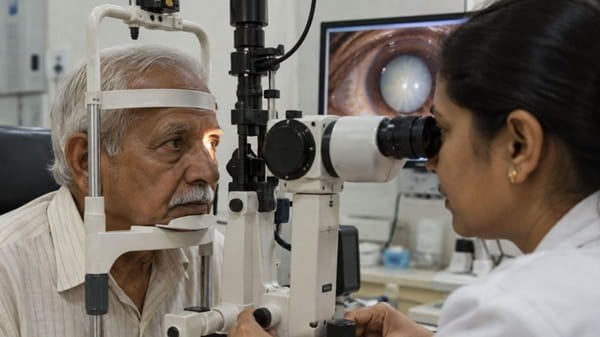
What Makes a Cataract Dense?
A dense cataract is one where the natural lens has become very hard and cloudy. It usually forms when a cataract is left untreated for a long time.
The lens may turn yellow, brown or even white. Vision can drop to the point where you see only light and shadows. Many people put off cataract surgery until this stage without realising it changes the planning.
Measuring the Eye Becomes Harder
Before cataract surgery, the doctor measures your eye to choose the power of the new lens.
Some machines use light to take these readings. A very cloudy lens can block that light, so the reading may not come through. In such cases, the doctor may use an ultrasound-based method instead to work out the lens power.
The Retina May Be Hidden
A dense cataract can stop the doctor from seeing the back of the eye. This matters because problems in the retina or optic nerve can affect how well you see after the operation.
An ultrasound scan may be done to check that the retina is in place. Your doctor may also explain that your final vision can only be judged once the cataract is removed.
Choosing the Right Technique
The hardness of the lens has a big say in how it is removed. Phaco surgery uses ultrasound energy to break the lens into small pieces. A very hard lens needs more of this energy, so the surgeon plans carefully to protect the cornea and the thin bag that holds the lens. In some eyes, phaco surgery is still the preferred option. In others, the surgeon may suggest a different method that removes the lens in one piece through a slightly larger opening.
Extra Steps During The Operation
A dense cataract may call for a few added precautions.
- A special dye may be used to make the lens capsule easier to see.
- A protective gel may be used to shield the inner lining of the cornea.
- The surgeon may take more time to break the lens gently.
- The type of anaesthesia may be chosen with your comfort in mind.
What It Means For Recovery
Healing after surgery for a dense cataract can take a little longer. The cornea may look slightly hazy at first, and your doctor may prescribe extra drops. Follow-up visits help confirm that the eye is settling well after cataract surgery.
Why Earlier Treatment Can Help
There is usually no need to wait until a cataract becomes very hard. When a cataract is treated earlier, phaco surgery may be simpler to plan, and the eye may settle sooner. If cloudy vision is affecting your reading, driving or daily work, it is worth asking your doctor about cataract surgery.
Conclusion
A dense cataract does not rule out treatment. It means the plan needs more thought, from eye measurements and scans to the choice of technique and aftercare.
Share your full health history with your surgeon and ask questions freely. Then follow the advice given before and after cataract surgery. Careful planning gives your eye the best chance to heal well.