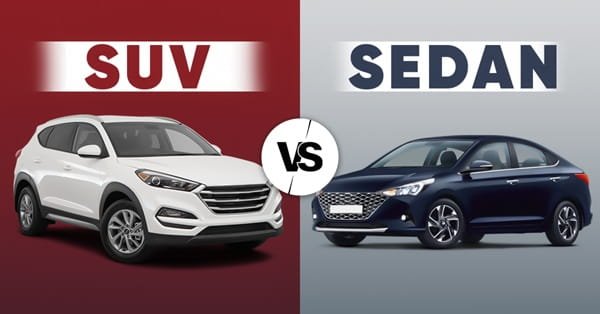
For an Indian family upgrading its primary car, the choice often comes down to the plush comfort of a sedan or the commanding, go-anywhere confidence of an SUV. A single festive trip may involve elderly parents, a child seat, three suitcases, shopping bags, and hours on an expressway. The same car may later face a waterlogged lane, a tall speed breaker, or a broken village road. Rear-seat legroom, easy entry for seniors, luggage capacity, safety, ride comfort, and long-distance fatigue therefore matter more than styling alone. Neither body style wins every family test. Let’s compare… the areas that matter most when choosing a family car in India.
1. Accessibility & Ergonomics: Comfort for Elderly Parents and Kids
For families that regularly travel with parents or grandparents, seat height can matter more than engine power. Most SUVs place the seat at a higher hip point, so elderly passengers can often step in and sit with less bending at the knees and hips. Getting out is easier too because they do not have to push themselves up from a very low seat.
Compact and midsize SUVs usually strike the best balance for people with limited mobility because the floor is high without demanding a large climb. Very tall ladder-frame SUVs can be harder for short or elderly passengers unless side steps are fitted.
A sedan’s low floor creates a snug seating position, but senior citizens usually bend more while entering and need greater effort to get out. Children generally have no such problem. Child-seat installation can also be easy when the rear door opens wide and the ISOFIX points are accessible.
Verdict: SUVs have the clear advantage when elderly family members are frequent passengers, although buyers should physically test entry and exit before booking.
2. Ride Quality & Rear-Seat Comfort on Long Family Trips
On a long family journey, a sedan shows why the body style is associated with executive comfort. Its lower centre of gravity keeps the car settled through highway curves, lane changes, and high-speed sections, while a long wheelbase can support a composed rear-seat ride.
On roads such as the Yamuna Expressway or Samruddhi Mahamarg, a well-tuned sedan usually feels planted at cruising speeds. Less side-to-side body roll means calmer rear-seat movement, reducing fatigue and potentially helping passengers prone to motion sickness.
Modern monocoque SUVs are far better than older designs, but the taller body can still create more vertical movement and lean through bends. Firmer suspension used to control that motion can also make sharp joints or broken patches feel busier in the second row.
On a badly damaged road, however, an SUV can feel more reassuring because of its clearance, suspension travel, and tyre sidewall.
Verdict: For smooth highways, rear-seat luxury, and minimum long-distance fatigue, sedans retain the edge. On badly broken routes, a well-tuned SUV can be more reassuring.
3. Boot Capacity & Storage for Family Vacation Gear
Festive travel exposes the difference between a big boot and a flexible one. Many sedans provide roughly 450 to 520 litres of luggage capacity. Their deep, enclosed trunks keep suitcases and gifts hidden while isolating passengers from loose-cargo noise.
The limitation is the opening. A folded wheelchair, baby stroller, oversized suitcase, or boxed appliance may not fit through a sedan’s boot aperture even when the stated capacity is generous.
An SUV is more versatile. A wide tailgate, tall loading area, and split-folding rear seats make bulky items, bicycles, pet carriers, or large purchases easier to carry. Roof rails can add another option where compatible luggage carriers are safely fitted.
Verdict: It is a tie. Sedans provide a secure, quiet, enclosed trunk, while SUVs offer much better loading flexibility for irregular family cargo.
4. Ground Clearance & All-Weather Family Safety
Indian family trips rarely stay on perfect roads. A highway run can end on a broken village road, while a city school route can become a pothole field after heavy monsoon rain. Here, an SUV’s ground clearance becomes a practical advantage.
Many family SUVs offer around 190 mm or more of clearance. With five passengers and a full boot, that extra margin helps over tall speed breakers, damaged road edges, steep ramps, and unpaved stretches. A sedan, commonly around 165 to 175 mm, needs more care when fully loaded.
Higher clearance can reduce anxiety on shallow waterlogged streets, but it does not make an SUV a flood vehicle. Deep water can damage any car, and safe wading depth should never be guessed from ride height.
Safety must be judged separately from body style. A larger-looking SUV is not automatically safer than a sedan. Check crash-test performance where available and look for six airbags, ESC, three-point seatbelts, seat-belt reminders, ISOFIX child-seat mounts, and strong braking performance. Correct child-seat installation and seatbelt use remain essential.
Verdict: SUVs win for ground clearance and rough-road confidence, but family safety depends on structural performance, safety equipment, tyres, and correct restraint use rather than body style alone.
Summary Comparison
| Metric / Family Aspect | Sedan | SUV / Compact SUV |
| Elderly Ingress / Egress | Requires more bending | Easy step-in height |
| High-Speed Ride Comfort | Superior; low body roll | Good, but more body movement |
| Motion Sickness Risk | Generally lower on twisty roads | Can be higher in tall, softly sprung models |
| Bad Road & Flood Capability | Moderate; about 165-175 mm | High; about 190-210 mm |
| Boot Loading Flexibility | Deep fixed trunk | Wide, tall hatch opening |
| Family Resale Value | Moderate to good | Usually stronger for popular SUVs |
The Final Verdict: Which One Should Your Family Choose?
The better family car depends on your passengers and roads. An SUV is the more adaptable all-rounder for access, clearance, visibility, and flexible luggage loading. A sedan remains the more refined choice when highway comfort, efficiency, and rear-seat calm matter most.
- Choose an SUV if: You frequently travel with elderly parents, face potholes or monsoon waterlogging, need to carry strollers or bulky luggage, or value a higher driving position and strong resale demand.
- Choose a Sedan if: Most family trips are on good city roads and expressways, rear-seat comfort and minimal body roll are priorities, and you want strong fuel efficiency, lower running costs, and a more planted driving experience.
For a family mixing city traffic, village visits, festive luggage, elderly passengers, and imperfect roads, an SUV is usually the easier one-car solution. If most journeys are on well-paved roads and expressways, a sedan can still be the more comfortable long-distance companion.