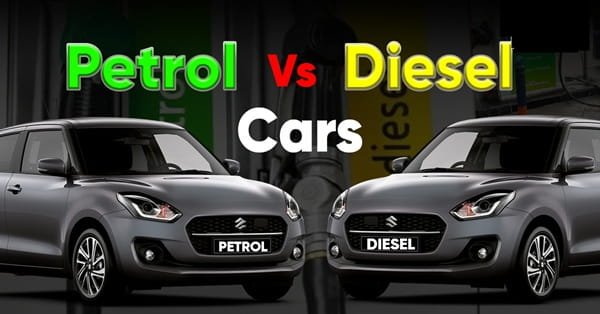
India’s petrol-versus-diesel debate is no longer as simple as it was a decade ago. Diesel once dominated for high-mileage buyers because the fuel was heavily subsidised, the price gap with petrol was large, and diesel engines delivered excellent highway efficiency. In 2026, that advantage is much narrower. Fuel prices are closer, BS6 Phase 2 Real Driving Emission requirements have made diesel emission systems more complex, and hybrids and EVs now compete for buyers focused on running costs.
That leaves a more practical calculation. Is the diesel version worth its higher purchase price? How much do you drive every month? Will most trips be short city runs or long expressway journeys? What about DPF maintenance, engine life, resale value, and changing rules in Delhi-NCR? The answer depends less on old beliefs about mileage and more on actual use. Let’s compare petrol and diesel cars across the factors that matter most in India.
1. Upfront Cost vs. Fuel Savings: Calculating the Break-Even Point
The first disadvantage of a diesel car appears before you leave the showroom. In many models, a comparable diesel variant can cost roughly ₹1.2 lakh to ₹2.5 lakh more than a petrol version, although the exact gap varies by model, trim and gearbox. Modern diesels also need costly emission-control hardware such as DPF and, on many vehicles, SCR/AdBlue systems.
The old argument was that cheaper diesel quickly recovered this premium. That calculation is slower today. As of October 1, 2026, Delhi petrol was ₹102.12 per litre and diesel ₹95.20, a gap of only ₹6.92. If a petrol car returns 15 km/l and a diesel returns 20 km/l, fuel cost is roughly ₹6.81 per km for petrol and ₹4.76 for diesel – a saving of about ₹2.05 per km.
At that rate, recovering a ₹1.5 lakh diesel premium requires around 73,000 km before considering insurance, servicing or repair differences. A driver covering 600-1,000 km a month may take too long to break even, while someone doing 1,500-2,000 km monthly can justify diesel much more easily.
Verdict: Petrol makes better financial sense for most buyers below roughly 1,200 km a month. Diesel becomes more convincing when annual running regularly crosses about 18,000 km.
2. Performance Dynamics & City Driving Realities
Petrol and diesel engines deliver performance differently. A modern petrol is usually quieter at idle, smoother in slow traffic, and happier to rev. That refinement matters during school runs, office commutes and stop-start driving.
Diesel’s strength is torque. Strong low-rpm pulling power makes overtaking, hill climbs and fully loaded highway trips feel more effortless. On long expressway drives, a diesel can hold cruising speed with fewer downshifts.
The complication is the DPF. A Diesel Particulate Filter traps soot and needs sufficient exhaust temperature to burn it during regeneration. Frequent short trips, low-speed running and heavy traffic may prevent regeneration from completing. Mahindra’s diesel manuals, for example, warn that these conditions can cause soot accumulation and may require a sustained highway drive for regeneration. If ignored, workshop intervention may be needed.
For an owner whose normal trip is only 5-8 km through congestion, that can become an unnecessary headache.
Verdict: Petrol is the easier, smoother choice for short urban use. Diesel remains better for high-speed cruising, hills, heavy loads and long highway travel.
3. Maintenance Costs and Long-Term Reliability
Diesel engines have a strong durability reputation because they are built to tolerate high compression and sustained load. But modern BS6 complexity means that does not automatically make it cheaper to own for 10 or 15 years.
Depending on the vehicle, a diesel may use a DPF, turbocharger, high-pressure injectors, EGR components, exhaust sensors and an SCR system with AdBlue. Routine servicing may be similar, but failures can be costly. Insurance may also be higher because diesel variants often cost more.
Some ownership comparisons show maintenance and insurance around 15-25% higher for diesel, but this is not a fixed rule. Service schedules, warranty coverage and parts prices vary by manufacturer. Petrol engines are generally simpler for low-mileage private use and are well suited to typical 8-12 year ownership cycles.
Verdict: Diesel still makes sense for sustained high-kilometre work, while petrol usually offers simpler and more predictable ownership for private use.
4. Government Regulations, 10-Year Rule, and Resale Dynamics
Regulation now matters, especially in Delhi-NCR. The long-standing framework treats diesel vehicles above 10 years and petrol vehicles above 15 years as end-of-life vehicles in the region. That history has made used-car buyers cautious about older diesels and can hurt resale as the 10-year mark approaches.
However, the 2026 legal position needs an important qualification. On December 17, 2025, the Supreme Court directed that no coercive steps be taken against owners of BS-IV and newer vehicles merely because a diesel crossed 10 years or a petrol vehicle crossed 15 years. Pre-BS-IV vehicles do not get the same protection. So the NCR framework remains relevant, but describing every modern diesel as automatically banned after 10 years is no longer accurate.
For a new-car buyer, diesel still carries greater regulatory uncertainty in NCR and other pollution-sensitive metros. Outside NCR, diesel SUVs and MPVs can retain strong demand where buyers value highway economy, torque and high annual mileage.
Verdict: Petrol carries lower regulatory risk for long-term metro ownership. Diesel can retain strong resale demand in high-mileage markets.
Summary Comparison
| Metric / Factor | Petrol Car | Diesel Car |
| Upfront Cost | Lower (base reference) | Often ₹1.2L-₹2.5L higher |
| Fuel Efficiency (km/l) | Moderate, roughly 12-18 km/l | Higher, roughly 18-24 km/l |
| Ideal Monthly Mileage | Under 1,200 km/month | Over 1,500 km/month |
| City NVH & Driveability | Smooth and quiet | More clatter; strong low-end torque |
| Maintenance & Insurance | Generally lower | Can be 15%-25% higher, model-dependent |
| NCR Age-Rule Benchmark | 15 years | 10 years |
The trade-off is clear. Petrol reduces purchase cost, complexity and city-use hassle. Diesel rewards drivers who genuinely exploit its efficiency and torque over long distances. In NCR, the age benchmarks must also be read alongside the Supreme Court’s current BS-IV-and-newer protection from coercive action based solely on age.
The Final Verdict: Which Fuel Type Fits Your Need?
For most private urban buyers in 2026, petrol is the safer default. Diesel needs substantial annual running before its higher purchase cost pays back, and short city trips are not ideal for DPF-equipped diesels.
- Buy a Petrol Car if: Your monthly driving is below about 1,200 km, most journeys are short city commutes, you live in a regulation-sensitive market such as Delhi-NCR, or you prioritise a quiet cabin, lower upfront cost and simpler maintenance.
- Buy a Diesel Car if: You regularly cover 1,500-2,000 km or more per month, spend significant time on highways, make frequent hill trips, carry heavy passenger or luggage loads, and want strong torque with better long-distance fuel economy.
A diesel can still be the better financial tool for a genuine high-mileage user. But buying one because “diesel gives more mileage” is no longer enough. Calculate your real monthly kilometres, compare like-for-like variant prices, and choose the engine that matches your actual driving pattern.