Buying a car in India often comes down to one classic dilemma: pay the full showroom and on-road price for a brand-new vehicle, or buy a two- to four-year-old pre-owned car and let the first owner absorb the steepest depreciation. A new car gives you factory warranty, untouched mechanicals, the latest safety equipment and the satisfaction of being the first owner. A good used car can put you into a larger hatchback, sedan or SUV for the same money.
The cheaper sticker price, however, does not automatically make a used car the better deal. Loan rates are usually higher, hidden damage can become expensive, and local age restrictions can shorten usable life. The right answer depends on financing, ownership period and your tolerance for repair risk. Let’s compare…
1. Depreciation & Financial Impact: Skipping the 30% Loss
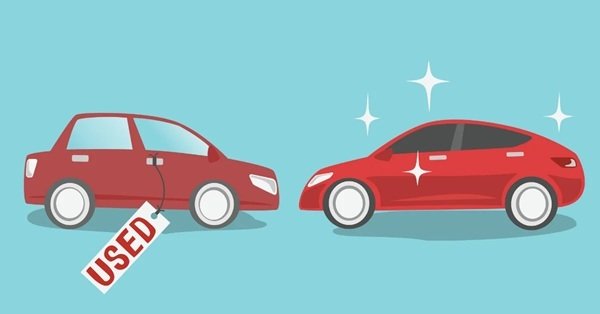
Depreciation is the strongest financial argument for buying used. A new car begins losing resale value soon after registration. In the Indian market, a first-year fall of roughly 20% to 30% is possible for many models, although popular cars can hold value better. By years two to four, much of the early depreciation has already been absorbed by the first owner.
There is also an important distinction between ex-showroom and on-road price. GST and applicable cess are already included in the ex-showroom figure. On-road cost then adds state road tax and registration, insurance and other applicable charges. Those expenses increase the cash paid for a new car but do not return proportionately at resale.
This is where a used car can upgrade your segment. A ₹10 lakh buyer may find a well-maintained compact SUV or premium hatchback that would cost much more new. A two- to four-year-old car can often be 25% to 40% cheaper than an equivalent new replacement, depending on brand, kilometres, condition and demand.
Verdict: Used cars offer stronger upfront value because the first owner has already taken the steepest depreciation hit.
2. Financing & Ongoing Expenses: Loan Rates and Insurance
Financing can narrow that advantage. New-car loans are easier for banks to value because the asset has a known invoice price and no previous ownership risk. Current leading-bank offers show new-car rates starting around 9% to 10% for strong borrowers, while used-car loans commonly begin above 11% and can move toward 15% or more depending on credit profile, vehicle age and tenure.
If most of the purchase is financed, that interest gap matters. A three- to five-percentage-point premium over several years can eat into the savings from buying used. Used-car lenders may also offer shorter tenures or lower loan-to-value ratios.
Insurance partly favours the used car. A new private car must carry three years of third-party cover at purchase, while own-damage cover in a bundled policy is generally for one year. Used cars normally have a lower Insured Declared Value, so the own-damage portion can be cheaper. Age, claims, add-ons and insurer pricing still affect the final premium.
Verdict: New cars win on cheaper financing. Used cars usually win on insurance and total cash outlay, especially with a large down payment.
3. Ownership Peace of Mind: Warranty vs. Hidden Maintenance Risks
A new car removes one major uncertainty: history. You know the engine has not been overheated, the clutch has not been abused and the body has not been repaired after a major accident or flood. Factory warranties commonly cover the early ownership years, and roadside assistance or extended warranty can add further protection.
A used car requires investigation. Clutch assemblies, tyres, brakes, batteries and suspension parts may already be approaching replacement. Modern BS6 vehicles also carry more electronics and emissions hardware. On diesel cars, repeated short city use can contribute to DPF regeneration problems.
A pre-purchase inspection is therefore essential. Check service records, accident repairs, flood or corrosion signs, tyre age, electronic fault codes and every electrical feature. RC details, insurance history, pending challans and loan hypothecation should also be verified.
Organised pre-owned platforms and manufacturer-certified programmes can reduce some risk through inspections, documentation support and, in some cases, limited warranty. Individual sellers may be cheaper, but the buyer carries more responsibility.
Verdict: New cars provide the strongest peace of mind. Used cars make sense when condition, history and paperwork are properly verified.
4. Regulations and Safety: Delhi-NCR Rules and Modern Tech
Location can change the used-car calculation completely. Delhi-NCR has long applied a 10-year limit to diesel vehicles and a 15-year limit to petrol vehicles under its end-of-life framework. That can sharply reduce the remaining value of an older diesel. The current legal position is more nuanced: a December 2025 Supreme Court interim order allowed action against over-age vehicles below BS-IV while giving BS-IV and newer vehicles relief from coercive action based only on age. NCR buyers should check the latest position before purchasing.
New cars also have a technology advantage. In 2026, six airbags are standard on many new models, while ISOFIX mounts, stability control, tyre-pressure monitoring and 360-degree cameras are increasingly common. ADAS is available on a growing number of cars, but it is not a blanket legal requirement, and six airbags are still not universal across every model sold in India.
A two- to four-year-old used car can still be very safe, particularly in a higher variant. Compare the exact trim rather than the model name alone, and check recognised crash-test results where available.
Verdict: New cars have the edge for current safety and assistance technology. Used-car buyers must pay closer attention to age, emission standard, exact variant and remaining usable life.
Summary Comparison
The financial trade-off becomes clearer when the two choices are placed side by side.
| Metric / Factor | New Car | Used Car (2–4 Years Old) |
| Upfront Cost / Segment Value | Full on-road price | Often 25%–40% lower |
| Loan Interest Rates | Lower; often ~9%–10% | Higher; roughly 11%–15%+ |
| Annual Insurance Premium | Higher OD cost due to high IDV | Usually lower OD cost |
| Warranty & Protection | Full factory warranty | Limited / seller or dealer specific |
| Modern Features & Safety | Latest tech; six airbags common | Depends on year and variant |
| NCR Age-Cap Impact | Maximum life from first registration | Remaining usable life may be shorter |
The Final Verdict: Which Car Fits Your Budget & Lifestyle?
There is no universal winner. A new car costs more because you are paying for certainty, a full ownership life and the newest technology. A well-bought used car rewards buyers who are willing to inspect carefully in exchange for better segment value.
- Buy a New Car if: You plan to keep it for eight to ten years or more, want full factory-warranty peace of mind, prioritise the newest safety technology, or expect to finance 80% or more of the purchase.
- Buy a Used Car if: You want the maximum vehicle for a fixed cash budget, need a first car for gaining driving experience, plan to change cars every two or three years, or want to avoid steep initial depreciation.
For a cash-focused value seeker, a clean two- to four-year-old used car is often the smarter financial purchase. For a heavily financed buyer or someone who values predictable long-term ownership, the new car remains the safer choice.