Learning to drive in India is exciting, but the first few weeks can also be intimidating. A beginner has to watch mirrors, judge two-wheelers squeezing through gaps, read unpredictable traffic, and still remember clutch bite, gear changes, and brake pressure. Then comes the classic nightmare: a red light on a steep flyover, a line of cars behind you, and the fear that the engine will stall or the car will roll backward. That is why new drivers increasingly face a basic choice before they even begin training. Should you learn on a traditional manual car, build full clutch-and-gear skills, and save money on the purchase? Or should you choose an automatic, remove the clutch from the equation, and focus on road awareness and confidence first? Both approaches have real advantages. Let’s compare… the factors that matter most to a first-time driver.
1. Learning Curve: Stalling, Clutch Control, and Driver Anxiety
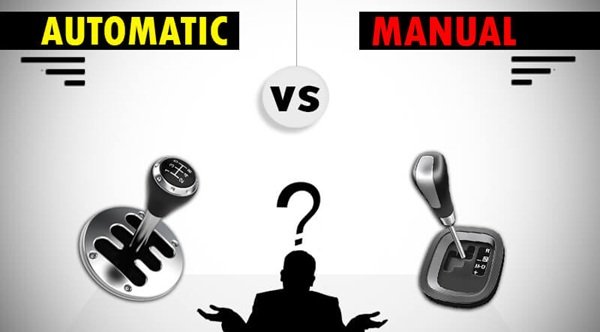
For a beginner, an automatic is simply easier to understand. There is no clutch pedal and no need to coordinate clutch release with accelerator input. Select Drive, release the brake, and the car moves forward. That leaves more attention for mirrors, lane position, pedestrians, scooters, and traffic signals.
Many automatic cars also offer a creep function, which lets the vehicle inch forward in slow traffic without accelerator input. Hill-hold assist, where fitted, can briefly prevent rollback on an incline. These features are especially reassuring in a flyover traffic jam where a new manual driver may otherwise panic while balancing clutch and throttle. Some manuals also offer hill-hold, so check the exact variant.
A manual demands three-pedal coordination. The learner must find the clutch bite point, release it smoothly, add throttle, select the correct gear, and repeat the process every few seconds in dense traffic. Stalling at a signal may be harmless mechanically, but horns from behind can make a learner rush inputs and lose attention on the road.
With practice, manual driving becomes natural. But during the first stage of learning, the extra workload is real.
Verdict: Automatic wins decisively for ease of learning, reduced stalling anxiety, and faster confidence in city traffic.
2. Budget Reality: Upfront Price Gap and Long-Term Maintenance
Manual cars remain attractive because they are usually the least expensive way into a model range. In many budget cars, an AMT version can cost roughly ₹45,000-₹80,000 more than a comparable manual, although the exact gap depends on trim and equipment. Smoother CVTs and torque-converter automatics can add around ₹1 lakh to ₹1.5 lakh or more, especially when the automatic is offered only in higher variants.
AMT is the value option because it automates the clutch and shifts of a manual-style gearbox, though low-speed changes can feel noticeable. CVTs are usually smoother, while torque converters often feel more natural when crawling and accelerating.
A well-maintained automatic can run reliably for years, but a major actuator, CVT, torque-converter, or control-unit failure can be expensive.
Manual gearboxes are simpler and usually cheaper to repair. Yet beginners who ride the clutch or hold the car on an incline using half-clutch can shorten clutch life and face an early replacement bill.
Verdict: Manual wins on purchase price and repair simplicity, but poor beginner clutch habits can reduce that cost advantage.
3. Fuel Economy: Dispelling the Automatic Efficiency Myth
The old belief that every automatic uses much more fuel is no longer accurate. Modern AMTs are often geared almost identically to their manual counterparts and can match, or occasionally beat, official manual efficiency because the electronics shift at consistent points. That consistency can help a beginner who would otherwise hold a manual in a low gear for too long.
CVTs can also be efficient in urban driving by keeping the engine near a useful operating range. Their high-rev feel under hard acceleration does not automatically mean poor economy.
Driver behaviour matters greatly. A manual driver who over-revs low gears, rides the clutch, or lugs the engine can easily lose the theoretical mileage advantage.
Older four-speed automatics were often clearly less efficient, but today’s choice must be judged gearbox by gearbox.
Verdict: Fuel economy is effectively a draw for many modern manual and AMT cars. The driver’s traffic conditions and habits often matter more than the transmission label.
4. Long-Term Versatility: RTO Tests and Driving Freedom
There is still a strong case for learning a manual even if you eventually buy an automatic. Manual training teaches clutch control, gear selection, and engine braking. Once those skills are learned, moving to an automatic is straightforward; an automatic-only learner still needs separate clutch and gear practice before safely driving a manual.
That broader skill helps when borrowing an older family car or renting where manuals remain common. It is practical versatility, not a universal legal right, because licensing rules differ by country.
In India, do not rely on hearsay about the RTO test. Parivahan says applicants must bring a vehicle of the type to which the application relates and demonstrate prescribed tasks; state procedures can vary. A 2025 Kerala High Court decision also stressed that manual-gear competency includes skills an automatic-only driver has not demonstrated. If you want the broadest skill base, manual training is the safer practical route, while checking your current state Sarathi/RTO procedure.
Verdict: Manual provides the broader driving skill set. Automatic is perfectly sensible if you expect to use automatics exclusively and want to become comfortable in traffic quickly.
Summary Comparison
| Metric / Aspect | Manual Car | Automatic Car (AMT / CVT) |
| Ease of Learning | Steeper learning curve | Very easy; no clutch coordination |
| Stalling Risk on Inclines | Higher for beginners | Very low; creep/hill-hold may help |
| City Traffic Fatigue | High with constant clutch work | Very low |
| Upfront Purchase Price | Budget-friendly | About ₹50,000-₹1.5 lakh+ premium |
| Fuel Efficiency (City) | Good, but driver-dependent | AMTs can match manuals; CVTs can be efficient |
| Versatility & Skill Base | Broader practical skill | Best if you plan to stay automatic-only |
The Final Verdict: Which One Should a Beginner Choose?
For most first-time drivers in a congested Indian city, an automatic is the easier starting point. Removing clutch management lets the learner focus on observation, braking, lane discipline, gap judgment, and defensive driving.
- Choose an Automatic if: You drive through daily bumper-to-bumper traffic, feel anxious about stalling, regularly face flyover inclines, or simply want to build road confidence with fewer mechanical tasks. An AMT suits a tighter budget; a good CVT or torque converter is worth considering if smoothness matters more.
- Choose a Manual if: You are on a strict purchase budget, want full clutch-and-gear mastery, expect to drive different family or rental cars, or prefer simpler and generally cheaper transmission repairs.
A beginner does not become a better driver merely by choosing the harder gearbox. If an automatic helps you stay calm, observe more, and practise safely, it is the better learning tool. If you have the patience to master a manual properly, however, you gain a wider skill set that remains useful long after the driving test.