When you walk through a well-designed home, every room feels connected. The living room flows into the corridor, which leads to the bedrooms, and the whole home reads as a considered space. Achieving that continuity often comes down to a decision most people make room by room, rather than all at once: the tiles. Rhea, a graphic designer in Bengaluru doing up her new 4BHK villa, picked tiles for each room separately. The living room got marble-look porcelain. The master bedroom got wood-look planks. The guest bedroom got a plain beige colour. Individually, each room looked fine. Together, the home felt scattered.
Why Room-By-Room Tile Selection Fails
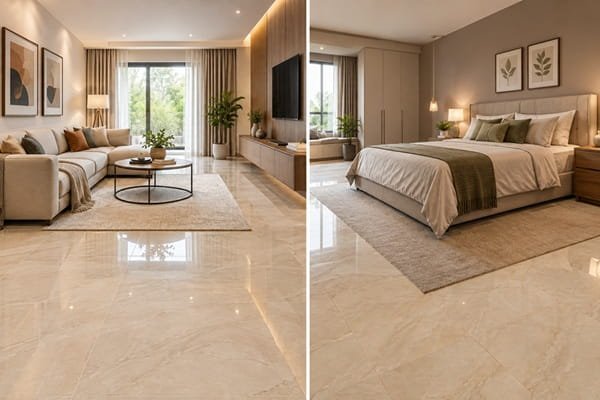
Most homeowners choose tiles the same way: start with the living room because it is the biggest space, then figure out the bedrooms and kitchen later. The problem is that each showroom visit happens on a different day, with a different mood and often at a different store. This can make even carefully selected tiles design for hall ideas feel disconnected from the rest of the home.
The result is a home where every room has tiles that make sense in isolation but clash when viewed as a sequence. The corridor connecting them exposes the disconnect.
A Tile Design For The Hall And Bedrooms That Connects
The solution is not to use the same tile everywhere. That flattens the home and makes every room feel identical. The solution is to create a tonal thread.
Shared colour family
Pick one colour family, such as warm greys, cool beiges or earthy browns, and keep all rooms within it. The living room might use a light grey marble look, while the bedroom uses a warmer grey wood-look bedroom tiles design. The kitchen can follow the same colour family with a slightly different finish. The tones vary, but they still belong to the same visual family.
Consistent floor temperature
If the living room tiles lean warm, the bedroom tile design should lean warm too. Mixing a cool grey living room floor with a warm honey bedroom floor creates an abrupt shift that feels unplanned.
Graduated intensity
Use bolder tiles in public areas and softer tiles in private spaces. A statement marble-look floor in the hall. A subtle, muted tone in the bedroom. The visual energy decreases as you move from social to personal rooms, which mirrors how people use their homes.
Living Room Tile Ideas That Set The Tone
The living room is often the first space people notice, so its flooring can establish the visual direction for the rest of the home.
Marble-look porcelain
A white or grey marble-look tile in 600x1200mm format gives the living room a premium, spacious feel. It reflects light and pairs well with most furniture styles.
Stone-look porcelain
Travertine or sandstone-look tiles add warmth and texture. Suited to living rooms with wooden furniture and earthy decor.
Large-format plain tiles
Clean, solid-colour tiles in 800x800mm or larger. Minimal grout lines, maximum visual calm. Works well in minimalist and contemporary interiors.
Bedroom tile design that complements
A bedroom tiles design should feel softer and more relaxing while still connecting visually with the rest of the house.
Wood-look planks
The most popular bedroom tile choice in India right now. Wood-look porcelain in oak, walnut or ash tones creates a restful atmosphere. The plank format feels softer and more intimate than a square tile.
Warm matt porcelain
A plain matt tile in warm beige, cream or soft grey. Simple, quiet and easy to pair with textiles and soft furnishings.
Subtle pattern tiles
A very low-contrast geometric or terrazzo-look tile adds visual interest without overwhelming the bedroom. Keep patterns light and muted.
Tying it all together with the corridor
The corridor acts as the visual bridge between the living room and the bedrooms, so its flooring should relate to both spaces. The tiles design for the hall can also influence how smoothly the corridor connects with the surrounding rooms.
A neutral, mid-tone tile usually works best. For example, if the hall has light grey marble-look tiles and the bedrooms have warm grey wood-look planks, a plain warm grey tile in the corridor can create a smooth transition without drawing attention to itself.
Rhea solved her continuity problem by replacing the corridor tile with a warm grey matt porcelain. The gradual shift from the cooler living room floor to the warmer bedroom flooring made the entire home feel more connected.
Working With A Coordinated Range
Choosing tiles from a coordinated collection can simplify the process of creating a consistent look throughout the home. For example, premium brands like Simpolo Tiles & Bathware offer a wide range of marble-look, stone-look, and wood-look tile collections. These options allow homeowners to choose different designs across rooms while maintaining a complementary colour palette.
Conclusion
Rhea’s villa now flows naturally from one room to the next. The marble-look hall, the warm-grey corridor, and the wood-look bedrooms feel like chapters of the same story rather than separate design decisions. A cohesive home does not require identical tiles everywhere; it requires a shared colour family, balanced transitions, and finishes that complement one another. When these elements work together, the entire home feels calmer, more connected, and thoughtfully designed.