Minimalism and Indian homes have always had a complicated relationship. Indian interiors have traditionally celebrated abundance — rich textiles layered over furniture, walls filled with family photographs and religious imagery, every surface telling a story, every corner holding something meaningful. The idea of stripping all of that back can feel not just aesthetically foreign but emotionally jarring, even disrespectful of the warmth and cultural richness that makes Indian homes feel like homes.
But minimalism, properly understood, is not about emptiness. It is about intention. It is about choosing what stays with care, giving the things you love room to breathe, and creating spaces that feel calm, uncluttered, and genuinely yours. Applied thoughtfully to the Indian home context — with its colour, its culture, its climate, and its deeply social character — minimalism becomes something quite beautiful. Here is how to approach it.
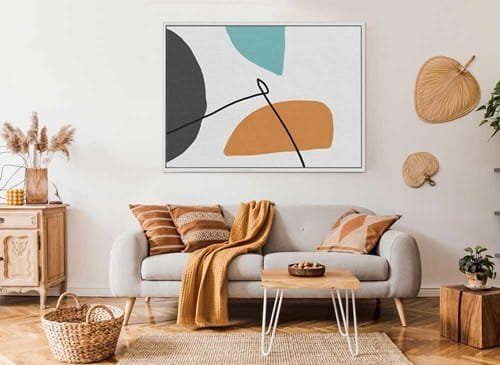
Start With Editing, Not Emptying
The first and most important shift in approaching minimalist decor for an Indian home is to think of the process as editing rather than emptying. You are not removing everything meaningful. You are curating a collection of things that are genuinely loved, actively used, or visually essential — and creating space around them so that they can actually be seen and appreciated.
In most Indian homes, the problem is not that any individual item is wrong. It is that too many things compete for attention simultaneously, creating visual noise that registers as stress even when you are not consciously aware of it. Minimising that competition — keeping the best things, storing or donating the rest — is the foundational act of minimalist decor. Start with one room, one surface, one corner. Remove everything. Then return only what earns its place.
The Indian Minimalist Colour Palette
Minimalism in a Western context typically defaults to white, grey, and beige. In an Indian home, this palette can feel sterile, lifeless, and completely at odds with the natural warmth of Indian interiors and the Indian light that falls through windows in gold and amber throughout much of the year.
The Indian minimalist palette works differently. Warm whites and off-whites — cream, bone, warm ivory — replace cold stark white. Deep earthy tones — terracotta, burnt sienna, ochre, forest green, dusty indigo — provide richness and grounding without visual clutter. A single accent wall in a muted but saturated tone, paired with neutral furniture and open space, creates visual interest without chaos. The goal is a palette that feels quiet and considered but never cold or characterless.
Natural materials reinforce this approach beautifully: raw wood furniture with visible grain, stone or terracotta floor tiles, jute rugs, cotton and linen textiles in undyed or naturally dyed tones. These are materials that have always been present in Indian domestic architecture — minimalism here is not foreign import, it is return to origin.
Furniture — Less, Better, More Considered
The most impactful single change in any Indian home is reducing furniture. Most Indian living rooms carry more furniture than the space actually needs or benefits from — oversized sofas that fill the room, multiple side tables, display cabinets packed with items, a television unit that dominates one wall and an assortment of chairs that serve occasional guests but occupy permanent space.
The minimalist approach is to choose fewer, better-quality pieces and allow each one room to exist as a considered object rather than part of a crowded arrangement. A single large sofa in a neutral fabric facing a low television console. A clean dining table with chairs that tuck fully underneath. A bed with a simple headboard, two matching bedside tables, and nothing on the floor beneath. The restraint creates breathing room that makes every piece feel more intentional and every room feel larger.
Indian brands like Nicobar Home, The Wood Works, Wudfurnitur, and several artisanal furniture makers available on platforms like Jaypore and Gaatha produce pieces that marry minimalist clean lines with Indian craft traditions — hand-carved details, natural wood finishes, brass accents — in a way that imported Scandinavian-style furniture never quite achieves in an Indian context.
Textiles — The One Area to Be Generous
In an otherwise minimal Indian home, textiles are the one category where generosity is not just acceptable but essential. A single beautiful handwoven durrie on the living room floor. Block-printed cotton cushion covers in one cohesive colour family. A lightweight kantha quilt folded over the arm of the sofa. Sheer cotton curtains that diffuse the Indian afternoon light into something golden and soft.
Indian textile traditions — block printing, ikat, khadi weaving, ajrakh, and Chanderi — produce objects of extraordinary beauty that carry cultural depth and artisanal skill. In a minimalist space, one carefully chosen textile becomes a focal point and a conversation piece rather than one of forty things on display. The restraint of the surrounding space makes the textile more visible, more appreciated, and more meaningful.
What Minimalism Preserves, Not Just Removes
A minimalist Indian home is not a showroom or a meditation retreat. It is still a home — warm, lived-in, personal, and culturally rich. The family photographs are still there, but edited to the most meaningful few, framed consistently, and hung with intention. The puja space is still present, given its own dedicated corner with simple dignity rather than squeezed onto a cluttered shelf. The books are still there, housed on clean shelves with room between them.
Minimalism in the Indian home context is ultimately about reverence — for space, for objects, and for the people who live within the walls. When you remove everything that has accumulated by default and keep only what you have chosen with care, what remains is not emptiness. It is everything that actually matters, finally given the space it always deserved.