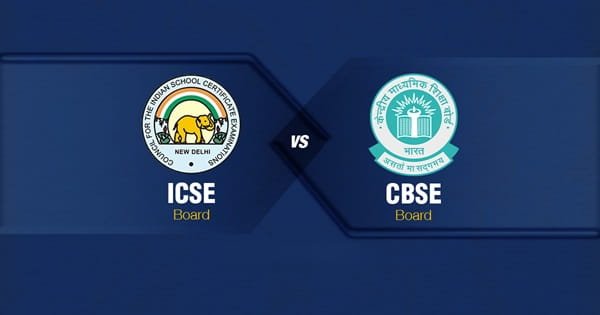
Choosing the right school education board is an important decision for parents and students in India. The board a student follows can influence the curriculum, teaching methods, examination pattern, subject choices, and overall learning experience. Two of the most popular school education boards in the country are the Central Board of Secondary Education (CBSE) and the Council for the Indian School Certificate Examinations (CISCE), which conducts the ICSE examination for Class 10.
Both boards aim to provide quality education, develop academic skills, and prepare students for higher studies. However, they differ in their curriculum structure, subject coverage, assessment methods, and approach to learning. CBSE is often preferred by students preparing for national-level entrance examinations, while ICSE is known for its detailed curriculum and emphasis on English language skills. Understanding these differences can help parents select a board that matches their child’s interests, abilities, and future educational goals.
What Is CBSE?
The Central Board of Secondary Education (CBSE) is a national-level school education board functioning under the Ministry of Education, Government of India. It is one of the most widely followed school boards in India, with affiliated schools across the country and abroad.
CBSE follows a structured curriculum designed to develop conceptual understanding, academic knowledge, and practical skills. It offers a relatively standardised syllabus across affiliated schools, making it convenient for students who relocate between cities or states.
Key features of CBSE include:
- A structured curriculum for Classes 1 to 12.
- Greater emphasis on core subjects such as Mathematics, Science, and Social Science.
- Focus on conceptual understanding and competency-based learning.
- Availability of different language and elective subjects.
- Assessment through board examinations and school-based evaluation.
- Curriculum alignment that can support preparation for national-level entrance examinations.
CBSE’s curriculum also includes skill-based subjects, art education, physical education, and other learning activities. Its official curriculum provides subject options for secondary and senior secondary classes.
What Is ICSE?
ICSE stands for Indian Certificate of Secondary Education. It is an examination conducted by the Council for the Indian School Certificate Examinations (CISCE), an independent national-level examination board in India.
ICSE is generally associated with a detailed curriculum, strong emphasis on English, and a broad range of academic and practical subjects. Students study multiple subjects and are assessed through external examinations and internal assessments.
Key features of ICSE include:
- Detailed subject syllabuses.
- Strong emphasis on English language and communication.
- A broad range of subjects and academic options.
- Greater attention to project work and internal assessment in several subjects.
- Practical learning opportunities in selected courses.
- Development of analytical, writing, and presentation skills.
The ICSE curriculum includes subjects such as Mathematics, Science, History, Geography, Economics, Computer Applications, Environmental Science, and other academic or skill-oriented options. The exact subject combinations depend on the examination regulations and the school’s offerings.
CBSE vs ICSE: Key Differences
Both boards aim to provide quality school education, but their curriculum structures and assessment approaches have some differences.
| Comparison Factor | CBSE | ICSE |
| Full form | Central Board of Secondary Education | Indian Certificate of Secondary Education |
| Conducting organisation | CBSE | CISCE |
| Curriculum | Structured and relatively standardised | Detailed and broad-based |
| English | Important subject | Strong emphasis on language and literature |
| Mathematics and Science | Suitable for conceptual and competitive exam preparation | Detailed subject coverage |
| Subject choices | Academic and skill-based options | Wide range of academic and application-based subjects |
| Assessment | Board examinations and internal assessment | External examinations and internal assessment |
| Transfer convenience | Widely available across India | Availability depends on CISCE-affiliated schools |
| Learning approach | Conceptual, competency-based, and structured | Detailed, analytical, and application-oriented |
The actual classroom experience depends considerably on the school, teachers, available facilities, and teaching methods.
Which Board Is Better for Competitive Examinations?
Students preparing for competitive examinations such as JEE, NEET, and CUET often consider CBSE because its subject structure and commonly used textbooks can align conveniently with parts of national entrance examination syllabuses.
For example, CBSE students studying Physics, Chemistry, Biology, and Mathematics may find it convenient to use NCERT textbooks as a foundation for entrance examination preparation.
However, ICSE students can also prepare successfully for these examinations. They may need to plan their preparation carefully and use the prescribed NCERT material and relevant entrance examination resources where necessary.
Therefore, choosing CBSE does not guarantee success in competitive examinations, and choosing ICSE does not create an academic disadvantage. Consistent preparation, conceptual understanding, and practice are more important.
Which Board Is Better for English and Overall Development?
ICSE is often preferred by parents who want a curriculum with substantial attention to English language and literature. Its detailed language requirements and written assessments can help students develop reading, writing, and communication skills.
CBSE also offers English language and literature subjects, along with opportunities to study different languages and electives. Its curriculum includes activities that support communication, creativity, and practical learning.
Both boards encourage overall development through academic subjects, physical education, and other activities. The quality of these opportunities depends on how effectively an individual school implements its curriculum.
Advantages and Disadvantages of CBSE and ICSE
Advantages of CBSE
- Widely available across India.
- Convenient for families who relocate frequently.
- Structured curriculum with a focus on core subjects.
- Useful foundation for several national entrance examinations.
- Offers academic and skill-based subject options.
Possible limitations of CBSE
- Some students may find the prescribed examination pattern challenging.
- The experience of practical and extracurricular learning varies between schools.
- Students may need additional resources for subjects or skills beyond their chosen curriculum.
Advantages of ICSE
- Strong emphasis on English language development.
- Detailed coverage of several academic subjects.
- Opportunities for project work and internal assessment.
- Broad subject choices, including creative and application-based areas.
- Encourages analytical thinking and written expression.
Possible limitations of ICSE
- The detailed syllabus may require consistent study and time management.
- School availability may be more limited in some locations.
- Students preparing for particular competitive examinations may need additional syllabus alignment.
How Should Parents Choose Between CBSE and ICSE?
Parents should select a board according to the child’s learning preferences, future goals, and available school facilities.
Consider these factors before making a decision:
- Career Goals: Check whether the curriculum supports the student’s intended academic direction.
- Learning Style: Consider whether the child prefers a structured syllabus or more detailed subject coverage.
- School Quality: Evaluate teachers, classrooms, laboratories, libraries, and extracurricular activities.
- Location: Consider the availability of suitable schools and the possibility of future relocation.
- Language Skills: Compare the language curriculum and communication opportunities.
- Fees and Accessibility: Review school fees, transport facilities, and other expenses.
It is important to remember that a good school with qualified teachers and supportive learning conditions can make a significant difference, regardless of the board.
Conclusion
CBSE and ICSE are both established school education systems in India, but they offer different academic experiences. CBSE provides a structured curriculum, broad national availability, and a convenient foundation for students preparing for competitive examinations. ICSE offers detailed subject coverage, strong English language development, and opportunities for analytical and practical learning.
There is no universally superior board for every student. The right choice depends on the child’s interests, learning style, academic goals, and the quality of the school. Parents should compare the curriculum, teaching standards, facilities, and overall educational environment before making a final decision.
Frequently Asked Questions (FAQs)
Q. Is CBSE better than ICSE?
Neither board is universally better. CBSE may suit students seeking a structured curriculum and convenient preparation for national entrance examinations, while ICSE may appeal to students who prefer detailed subject coverage and strong English language development.
Q. Which board is better for JEE and NEET preparation?
CBSE can offer a convenient foundation because of its alignment with commonly used NCERT material. However, students from both boards can prepare successfully with appropriate study resources.
Q. Is ICSE more difficult than CBSE?
ICSE is often considered more detailed in certain subjects, particularly English. However, difficulty depends on the student’s abilities, preparation, teaching quality, and individual subject preferences.
Q. Which board is better for English?
ICSE is known for its substantial emphasis on English language and literature. However, CBSE also provides structured English courses and opportunities to develop communication skills.
Q. Can a student change from ICSE to CBSE?
Yes, students can generally change boards, subject to admission availability, eligibility conditions, documentation, and the receiving school’s rules.
Q. Which board is better for studying abroad?
Both CBSE and ICSE qualifications are recognised by many international educational institutions. Admission requirements vary by country and university, so students should check the specific eligibility criteria.
Q. Does the school matter more than the education board?
Both matter, but school quality has a significant influence on the learning experience. Qualified teachers, good infrastructure, academic support, and extracurricular opportunities are important factors in a student’s development.